


What Is Magnetic Assembly
Magnetic assembly refers to the process of assembling products and devices using magnetic properties. It involves the use of different types of magnetic materials such as permanent magnets, electromagnets, and magnetic fields to assemble and attract different components of a workpiece. Magnetic assembly is commonly used in industries such as automotive, electronics, medical, and aerospace, where precision and speed are important factors in the assembly process. The process helps minimize the use of manual labor and makes the assembly process more efficient and accurate.
Durability
Magnetic assembly techniques provide robust and durable assembled parts.
Improved safety
Magnetic assembly reduces the risks associated with traditional assembly methods, such as sharp blades and tools.
Environmental friendly
Magnetic assembly techniques do not produce hazardous waste to the environment which makes it a more eco-friendly option.
Cost-effective
Magnetic assembly is cost-effective as it reduces manual labor costs and increases production rates, leading to an overall reduction in assembly expenses.
Increased accuracy
Magnetic assembly techniques ensure high precision and accuracy in assembling parts.
educed labor
Magnetic assembly reduces the need for manual assembly which can reduce the labor costs.
Time-saving
Magnetic assembly reduces the assembly time which can increase the production rate of the goods.
Consistent quality
Magnetic assembly ensures consistent assembly quality as the parts fit together perfectly every time.
Flexibility
Magnetic assembly techniques enable the assembly of a variety of different materials and shapes.
Repeatability
Magnetic assembly techniques enable repeatability of assembly process at large scale.


Why Choose Us
Expertise and Experience
Our team of experts have years of experience in delivering high quality services to our clients. We hire only the best professionals who have a proven track record of delivering exceptional results.
Competitive Pricing
We offer competitive pricing for our services without compromising on quality. Our prices are transparent, and we do not believe in hidden charges or fees.
Customer Satisfaction
We are committed to delivering high quality services that exceed our clients' expectations. We strive to ensure that our clients are satisfied with our services and work closely with them to ensure their needs are met.
One-stop service
We promise to provide you with the fastest reply, the best price, the best quality, and the most complete after-sales service.

When it comes to the materials used for creating magnetic assemblies, the choices are vast. The selection of materials largely depends on the desired magnetic properties, the operating environment, and the specific application requirements.
Neodymium Iron Boron (NdFeB): This is the most potent commercially available magnet material, offering high performance even in small sizes. However, it is less resistant to corrosion and high temperatures.
Alnico: Comprising aluminum, nickel, and cobalt, Alnico magnets are highly resistant to high temperatures and corrosion. They offer moderate magnetic strength.
SmCo (Samarium Cobalt): Though expensive, SmCo provides high magnetic strength and excellent temperature stability, making it suitable for demanding applications.
Understanding the basics of magnetic assemblies is the first step in exploring this fascinating field. In the next section, we'll dive deeper into the manufacturing processes and the key applications of these critical components.
Manufacturing Processes of Magnetic Assemblies
The manufacturing of magnetic assemblies often involves a series of steps including machining, magnetizing, and assembling. The process begins with the production of the magnetic material, which is usually carried out using powder metallurgy or sintering techniques. Once the magnets are formed, they are magnetized to create a specific magnetic field.
In the assembly stage, the magnets are combined with other non-magnetic parts, often using adhesives or mechanical fastening. High precision is required during assembly to ensure the desired magnetic field and functionality.
Magnetic assemblies find their applications in a vast range of industries, owing to their unique properties and versatile functionality.
Automotive Industry: In the automotive industry, magnetic assemblies are used in various components like alternators, starters, and electric motors.
Medical Industry: They play a crucial role in medical devices, particularly in imaging machines like MRI scanners.
Consumer Electronics: From smartphones to laptops, magnetic assemblies are integral parts of various electronic devices.
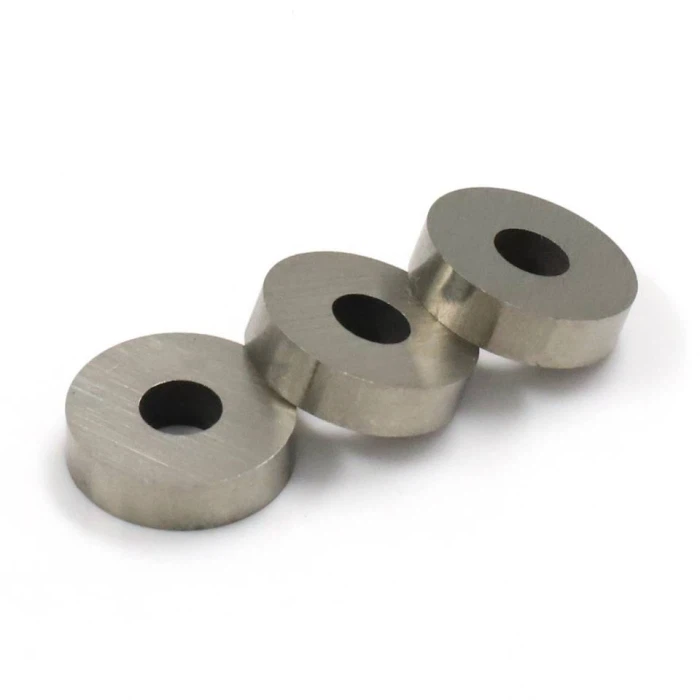
The Following Is A Simple Comparison of Permanent Magnets Versus Electromagnets
The exception to the above is Energise-to-Release Electromagnets (Electro-Permanent Magnets) – this is a specialised magnetic assembly that combines a permanent magnet within an electromagnet.
Permanent Magnet
Unlike other magnets that lose their magnetism over time, these types of magnets can retain their magnetism. Permanent magnets are composed of highly magnetised hard materials. Among the best examples of permanent magnets are bar magnets. This demonstrates typical magnetic behaviour.
What are some uses of permanent magnets
There are many uses for a permanent magnet. The most common application of a magnet is for the purpose of attracting other magnetic items, but it also has functions in electronic equipment. Permanent magnets are used in computers, motors, cars, generators, headphones, speakers, sensors, etc. Magnetic strips and fridge magnets are also common uses of permanent magnets.
Electromagnet
An electromagnet usually has an iron core. Adding an iron core to a solenoid increases its magnetic field strength. In a connection between a battery and a solenoid by wounding wire around a nail, a magnetic force is generated. This happens due to the magnetic field created when current flows through the coil. As long as there is a d.c. current running through the coil, the nail's magnetic properties remain, but after that, the magnetism of the nail is lost. By winding wire around a core of iron, you are able to create electromagnets.
Electromagnets use electricity to generate magnetic flux. As opposed to permanent magnets, electromagnets can have their magnetic output easily adjusted by varying the amount of electricity flowing through them and unlike those with fixed magnetic output. Electromagnets are also able to have their poles reversed by reversing electricity flow by changing the direction of the electric current.
Current Density and Fill Factor
When making electromagnets you may end up creating a round wound coil (wound on a former/bobbin). Often the wire is round (has a diameter) so you cannot get a perfect filling of the space available for the wire. The amount you can actually occupy of the space available is called Fill Factor – this can be up to say 80% (remainder is air gaps) but it will vary with the design and wire type.
Then the wire type itself has an insulation layer (to prevent short circuits) but as each wire has a resistance per unit length and can conduct electricity the coil will have a I^2.R power loss which will always become heat. Each wire will have a heating rating e.g. 155 deg C. So you need to factor in cooling of components. But each wire also has a current density (how much current per unit cross sectional area of the wire) – you need to ensure the design does not exceed this as well to prevent dangerous damage to the wire. If the wire overheats it may start to burn out and the insulation gets damaged and fails.

Magnetic separations: Magnetic assemblies are widely used for separating magnetic particles from non-magnetic particles in various industries such as biotechnology, mining, food processing, and environmental protection.
Magnetic levitation: Magnetic assemblies are used in magnetic levitation systems to lift objects without any physical contact, reducing friction and enabling high-speed transportation.
Magnetic bearings: Magnetic assemblies used in magnetic bearings help to reduce friction and wear, providing a longer service life for machinery.
Magnetic pumps: Magnetic assemblies used in magnetic pumps provide a non-contact method for transferring fluids, preventing contamination and improving safety.
Magnetic clutches: Magnetic assemblies are used in magnetic clutches to transmit torque from one shaft to another with no direct physical contact, improving efficiency and reducing wear.
Magnetic resonance imaging (MRI): Magnetic assemblies are used in MRI equipment to generate the magnetic field required for imaging procedures.
Magnetic sensors: Magnetic assemblies are used in magnetic sensors to detect and measure changes in magnetic fields, enabling various applications such as position sensing, speed sensing, and navigation.
Safety In Handling Magnets


Accidental Injuries Caused By Handling Permanent Magnets
Magnets can fly together or on to steel objects causing severe pinching or lacerations to the skin.
Magnets can shatter on impact causing eye injury. Goggles or safety glasses must be used when handling.
Children must not be permitted to handle or play with magnets.
Avoid flame or oven heating, grinding, or cutting of magnets. These procedures carry a risk of oxygen absorption and possible shattering. Enclosed magnets may explode if heated. Do not attempt to weld magnets or assemblies.
OTHER HEALTH CONSIDERATIONS.
Long term daily handling of Permanent Magnets may represent a health risk.We conclude from this Standard that there is usually no danger to operators occasionally cleaning or handling magnets with static magnetic field levels up to 20,000 gauss or 2 Tesla.
However, as a simple precaution, we recommend:
Avoid unnecessary handling and uninformed handling/assembly of magnets.
Avoid long term close bodily contact with strong magnets.
Keep strong magnets away from head, eyes, heart, and trunk.
Continuous daily exposure should not exceed 2,000 gauss or 0.2 tesla.
Maximum one-off exposure should not exceed 20,000 gauss or 2 tesla.
Persons with cardiac pacemakers, hormone infusion pumps (e.g. insulin), or other sensitive devices implanted in the body, or metallic prosthetic implants must not handle or come into close proximity of magnets. Specialist medical opinion must be sought before such persons handle magnets or come into close contact with magnets or magnetic fields.
Persons with cardiac pacemakers must not allow magnet within close proximity of their chest or be in an environment above .5mt (5 gauss).
As a general guide, persons with cardiac pacemakers should avoid coming closer than 12″ or 300mm from the working or field-throwing face of magnets such as:
Small plate magnets, grate magnets, probe magnets, magnet bars, spherical magnets, etc.
Note: There are other magnets such as suspension magnets, magnetic drums and pulleys, overband and crossbelt magnets, etc which could require the minimum distance to be up to 2 metres. When in doubt a gauss chart should be undertaken.
When removing magnets for cleaning, NEVER allow magnets to come in close contact with other magnets or steel surfaces – this can result in severe crushing, laceration, and amputation injuries
IMPORTANT: NO PERSON WITH A PACEMAKER SHOULD EVER HANDLE OR CLEAN MAGNETS!
Our Factory
Our magnets are mainly applied to motors and generators, such as Servo motors, Linear motors, Wind power generators, Automotive drive motors, Compressor motors, Audio equipment, Home theater, Instrumentation, Medical equipment, Automotive sensors, Wind turbines and Magnetic tools etc.

FAQ
Chongqing Great Wall Technology Co., Ltd. is well-known as one of the leading magnetic assembly manufacturers and suppliers in China. Please feel free to buy or wholesale high quality magnetic assembly made in China here from our factory. For customized service, contact us now.
Samarium Cobalt Magnets, Soft Magnetic Composites, MnZn Ferrite Core