


Soft Magnets
What Is Soft Magnets
Soft magnets are materials that are easily magnetized and demagnetized. They are also known as temporary magnets or electromagnets. They are made from ferromagnetic materials like iron, nickel, cobalt, and their alloys. Soft magnets have low coercivity, which means they require less magnetic field strength to magnetize and demagnetize. Soft magnets are widely used in applications such as electric motors, transformers, generators, and magnetic sensors. They are also used in magnetic shielding to protect sensitive electronic devices from magnetic interference. Unlike hard magnets, soft magnets lose their magnetic properties over time when not exposed to a magnetic field.
Low Coercivity
Soft magnets have very low coercivity which makes them easy to magnetize and demagnetize.
Low Magnetic Remanence
Soft magnets have low magnetic remanence which means they do not retain a magnetic field after the magnetizing force is removed.
Cost-Effective
Soft magnets are generally less expensive compared to hard magnets and can be manufactured in large quantities at a lower cost.
High Permeability
Soft magnets have high permeability which makes them ideal for use in electromagnetic devices.
Low Hysteresis Losses
Soft magnets have very low hysteresis losses which makes them more efficient and reduces energy losses.
Good Thermal Stability
Soft magnets are stable at high temperatures, which makes them ideal for use in high-temperature applications.
High Corrosion Resistance
Some soft magnets have high corrosion resistance, which makes them ideal for use in harsh environments.
Environmental Friendly
Soft magnets are usually made from low-toxicity materials, and hence, they are considered eco-friendly.
High Electrical Conductivity
Some soft magnets have high electrical conductivity, which makes them useful in electrical and electronic applications.


Why Choose Us
Expertise and Experience
Our team of experts have years of experience in delivering high quality services to our clients. We hire only the best professionals who have a proven track record of delivering exceptional results.
Competitive Pricing
We offer competitive pricing for our services without compromising on quality. Our prices are transparent, and we do not believe in hidden charges or fees.
Customer Satisfaction
We are committed to delivering high quality services that exceed our clients' expectations. We strive to ensure that our clients are satisfied with our services and work closely with them to ensure their needs are met.
One-stop service
We promise to provide you with the fastest reply, the best price, the best quality, and the most complete after-sales service.
Safety In Handling Magnets

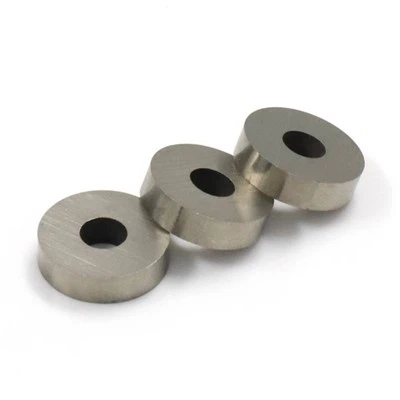
Soft magnetic materials are those materials that are easily magnetised and demagnetised. They typically have intrinsic coercivity less than 1000 Am-1. They are used primarily to enhance and/or channel the flux produced by an electric current. The main parameter, often used as a figure of merit for soft magnetic materials, is the relative permeability , which is a measure of how readily the material responds to the applied magnetic field. The other main parameters of interest are the coercivity, the saturation magnetisation and the electrical conductivity.
The types of applications for soft magnetic materials fall into two main categories: AC and DC. In DC applications the material is magnetised in order to perform an operation and then demagnetised at the conclusion of the operation, e.g. an electromagnet on a crane at a scrap yard will be switched on to attract the scrap steel and then switched off to drop the steel. In AC applications the material will be continuously cycled from being magnetised in one direction to the other, throughout the period of operation, e.g. a power supply transformer. A high permeability will be desirable for each type of application but the significance of the other properties varies.
For DC applications the main consideration for material selection is most likely to be the permeability. This would be the case, for example, in shielding applications where the flux must be channelled through the material. Where the material is used to generate a magnetic field or to create a force then the saturation magnetisation may also be significant.
For AC applications the important consideration is how much energy is lost in the system as the material is cycled around its hysteresis loop. The energy loss can originate from three different sources: hysteresis loss, which is related to the area contained within the hysteresis loop; eddy current loss, which is related to the generation of electric currents in the magnetic material and the associated resistive losses and anomalous loss, which is related to the movement of domain walls within the material. Hysteresis losses can be reduced by the reduction of the intrinsic coercivity, with a consequent reduction in the area contained within the hysteresis loop. Eddy current losses can be reduced by decreasing the electrical conductivity of the material and by laminating the material, which has an influence on overall conductivity and is important because of skin effects at higher frequency. Finally, the anomalous losses can be reduced by having a completely homogeneous material, within which there will be no hindrance to the motion of domain walls.
- Iron-Silicon Alloys
- Amorphous & Nano-Crystalline Alloys
- Nickel-Iron Alloys
- Soft Ferrites
Iron
A soft iron magnet is a ferrite metal that is easy to work with in various applications. It has a low melting point and is easily magnetized when there is an inducing magnetic field. It is demagnetized when this field is removed.There are two types of magnets: permanent magnets and electromagnets. Permanent magnets do not require electricity, while electromagnets do require electricity to power them so they can create a magnetic field.Soft Iron is also used for rods that make up an electromagnet's soft iron core, which is a core of the electromagnetic coil that helps improve its efficiency.
Soft iron magnet material also combines with other soft magnetic materials to form the semi-hard magnetic materials below.
Iron-Silicone Alloys
Iron-silicone alloys are a type of soft magnet that is made up of iron and silicone. They have high permeability and low coercivity, making them easy to magnetize and demagnetize. They are also resistant to corrosion and have a high resistance to heat, making them ideal for use in industrial furnaces.
Nickel-Iron Alloys
Nickel-iron alloys are another type of soft magnet that is made up of nickel and iron. These alloys have high permeability and low coercivity, making them easy to magnetize and demagnetize. They are also resistant to corrosion and have a high resistance to heat, which makes this alloy suitable for use in industrial furnaces.Each of these materials has unique properties that can be advantageous for different applications. For example, iron is a good choice for low-cost soft magnets, while nickel-iron alloys can create a high permeability material magnet.
Difference between Hard Magnetic Material and Soft Magnetic Material
|
Basis of Difference |
Hard Magnetic Materials |
Soft Magnetic Materials |
|
Definition |
The magnetic materials that can retain their magnetism even after removal of external magnetic field, and are difficult to magnetized and demagnetized are known as hard magnetic materials. |
The magnetic materials that can be easily magnetized and demagnetized are known as soft magnetic materials. |
|
Magnetism |
The magnetism of hard magnetic materials is constant. |
The magnetism of soft magnetic materials is temporary. |
|
Area of hysteresis loop |
For the hard magnetic materials, the area of the hysteresis loop is large. |
For the soft magnetic materials, the area of the hysteresis loop is small. |
|
Ease of magnetization |
Hard magnetic materials cannot be magnetized easily. |
Soft magnetic materials can be easily magnetized. |
|
Coercivity |
The coercivity of hard magnetic materials is high. |
Soft magnetic materials have relatively low coercivity. |
|
Retentivity |
Hard magnetic materials have large value of retentivity. |
Soft magnetic materials have small value of retentivity. |
|
Movement of domain walls |
The domain walls of the hard magnetic materials do not move easily. |
The domain walls of soft magnetic materials can move easily. |
|
Value of H for magnetization |
Hard magnetic materials require very large value of magnetizing force (H) for magnetization. It is because, they need comparatively more energy for the movement of domain walls. |
Soft magnetic materials require comparatively low value of magnetizing force (H) for magnetization. |
|
Hysteresis loss |
Due to large area of hysteresis loop, the hysteresis loss in case of hard magnetic materials is high. |
Soft magnetic materials have low hysteresis loss. |
|
Permeability |
The permeability of hard magnetic materials is low. |
The permeability of soft magnetic materials is high. |
|
Susceptibility |
Hard magnetic materials are less susceptible as a result these are less influenced by the external magnetic field. |
The susceptibility of soft magnetic materials is high. Consequently, the external magnetic field can easily influence them. |
|
Eddy current loss |
Hard magnetic materials have low electrical resistance. As a result, the eddy current loss in these materials is high. |
Due to low value of electrical resistance of soft magnetic materials. These materials have less eddy current loss. |
|
Energy stored |
Hard magnetic materials can store high energy in the magnetic field. |
Soft magnetic materials store less energy in the magnetic field. |
|
Applications |
Hard magnetic materials are used in a wide range of applications like in, making permanent magnets, microphones, loudspeakers, motor drives, injection pumps, printers, clocks, measuring instruments, lifting apparatus, robotics, MRI machine and many other medical instruments, etc. |
Soft magnetic materials are extensively used in electrical engineering such as for making core the electromagnetics, core of electrical machines like transformer, motor, generator, parts of measuring devices, etc. |
|
Examples |
The examples of hard magnetic materials are alnico, ferrites, rare earth cobalt, cobalt platinum, etc. |
Some popular examples of soft magnetic materials are pure iron with small carbon content, siliconiron alloy, nickel-iron alloy, etc. |

Keep them away from strong magnetic fields: Soft magnets are magnets that can be easily demagnetized. They can lose their magnetic properties if they come into contact with strong magnetic fields, such as those produced by magnets used in MRI machines. Therefore, it's important to keep them away from such fields.
Store them in a cool, dry place: Soft magnets can also be affected by temperature and humidity. To prevent them from losing their magnetic properties, store them in a cool, dry place, away from direct sunlight and moisture.
Handle them carefully: Soft magnets are delicate and can be easily damaged if handled roughly. Handle them with care and avoid dropping them.
Use them properly: Soft magnets are not as strong as hard magnets, so don't use them for applications that require strong magnetic fields. Instead, use them for applications that require low or moderate magnetic strength, such as in speakers or motors.
Clean them regularly: Soft magnets can accumulate dirt and dust over time, which can cause them to lose their magnetic properties. You can clean them with a soft cloth or a mild soap solution to remove any dirt or dust. Avoid using abrasive materials or chemicals that can damage the magnet's surface.
Our Factory
Our magnets are mainly applied to motors and generators, such as Servo motors, Linear motors, Wind power generators, Automotive drive motors, Compressor motors, Audio equipment, Home theater, Instrumentation, Medical equipment, Automotive sensors, Wind turbines and Magnetic tools etc.

FAQ
Chongqing Great Wall Technology Co., Ltd. is well-known as one of the leading soft magnets manufacturers and suppliers in China. Please feel free to buy or wholesale high quality soft magnets made in China here from our factory. For customized service, contact us now.
MnZn Ferrite Core, Injection Molded Magnets, Bonded Neodymium Disc Magnet