


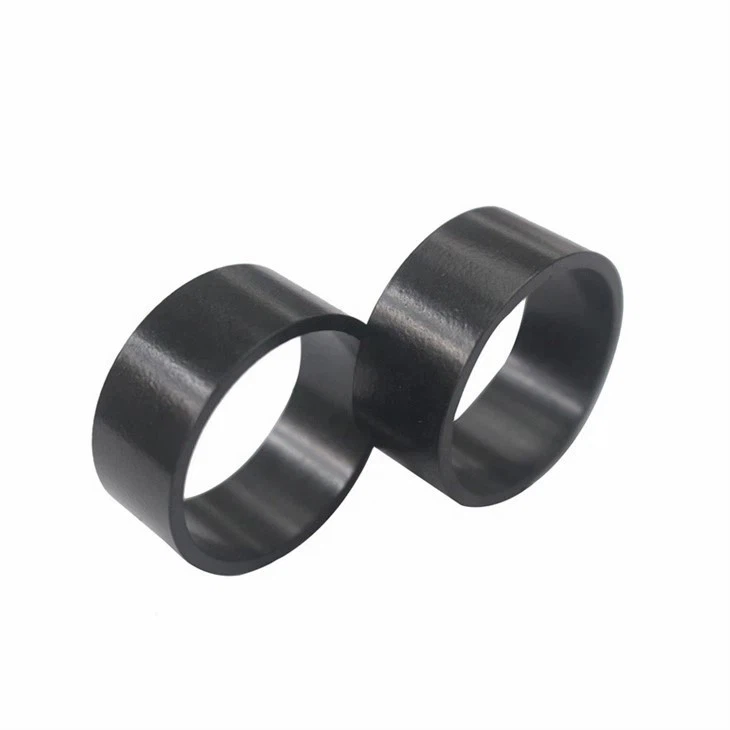
Chongqing Great Wall Technology Co., Ltd. is one of the leading manufacturers and suppliers of neodymium bonded magnet in China, also supports customized service. Welcome to wholesale high quality neodymium bonded magnet for sale here from our factory.
Neodymium bonded magnet, also known as neodymium magnet, is a type of magnet made by bonding neodymium, iron, and boron magnetic powder with a binder. Neodymium is a rare earth element with strong magnetic properties. These magnets are known for their high magnetic strength and durability.
Why Choose Us
Expertise And Experience
Our team of experts have years of experience in delivering high quality services to our clients. We hire only the best professionals who have a proven track record of delivering exceptional results.
Competitive Pricing
We offer competitive pricing for our services without compromising on quality. Our prices are transparent, and we do not believe in hidden charges or fees.
Customer Satisfaction
We are committed to delivering high quality services that exceed our clients' expectations. We strive to ensure that our clients are satisfied with our services and work closely with them to ensure their needs are met.
One-Stop Service
We promise to provide you with the fastest reply, the best price, the best quality, and the most complete after-sales service.


Bonded magnets, also known as sintered magnets or injection-molded magnets, offer several advantages over traditional solid magnets, including.
Customization: Bonded magnets can be shaped into complex geometries and intricate designs that would be difficult or impossible to achieve with solid magnets. This allows for precise integration into a wide array of products and applications.
Material Efficiency: Because they are manufactured by bonding magnetic powder with a polymer binder, bonded magnets can be produced in net shapes, minimizing waste and reducing the need for additional machining processes.
Dimensional Stability: Bonded magnets maintain their shape and size under varying conditions, including temperature changes, making them suitable for applications where dimensional stability is critical.
Reduced Weight: Bonded magnets can be lighter than solid magnets, which is beneficial for applications where weight reduction is a priority, such as in the automotive or aerospace industries.
Improved Handling: Their flexibility in shape and size allows for easier handling and assembly in manufacturing processes. They can also be incorporated into flexible sheets or tapes for various applications.
Vibration Dampening: The presence of a non-magnetic binder in bonded magnets can help reduce vibration and noise, which is advantageous in sensitive electronic devices and machinery.
Corrosion Resistance: Depending on the binder material used, bonded magnets can exhibit excellent corrosion resistance, making them suitable for outdoor or marine environments.
Thermal Conductivity: Some bonded magnet materials can be engineered to have better thermal conductivity than solid magnets, which is important for heat dissipation in certain applications.
Electrical Insulation: The binder can act as an electrical insulator, protecting the magnetic material and allowing for the production of magnetic components with integrated electrical circuits.
Applications of Neodymium Bonded Magnet
Neodymium bonded magnets have many applications. They are commonly used in various industries, such as.
Electronics: In electronic devices like motors, speakers, and hard drives.
Automotive: For motors in hybrid and electric vehicles.
Industrial: In magnetic separators, sensors, and holding devices.
Consumer products: Magnets in magnetic toys, tools, and household items.
The strong magnetic field of neodymium bonded magnets makes them highly attractive, but it also means they need to be handled with care as they can be dangerous if not used properly. It's important to follow safety guidelines when working with these magnets.
What Are The Differences Between Bonded Magnets And Sintered Magnets?
Unlike sintered magnets, the individual powder particles of bonded magnets must have a sufficiently high coercivity. If the phase composition and microstructure required for high coercivity are severely damaged in the powdering process, a good bonded magnet cannot be made, because the damage of the grain boundary phase and the oxidation of the particles have greatly reduced the coercivity.
Another major difference between bonded magnets and sintered magnets is that the magnetic properties of bonded magnets are greatly reduced. We know that the maximum magnetic energy product of a magnet is proportional to the square of its remanence, and the remanence is proportional to the saturation magnetic induction, orientation, and volume filling rate of the magnetic powder in the magnet. Binders and additives occupy a considerable volume (close to 20%) in bonded magnets, and many bonded magnets are not oriented. Even for oriented magnets, it is difficult to achieve the same level of orientation as sintered magnets, so the performance of bonded magnets with the same volume is far inferior to that of sintered magnets.

Neodymium bonded magnets are manufactured by bonding neodymium, iron, and boron magnetic powder with a binder. The manufacturing process typically involves the following steps.
Mixing the ingredients: The neodymium, iron, and boron magnetic powder are mixed together with a binder to form a paste.
Pressing the mixture: The paste is pressed into a desired shape using a die or mold.
Curing the magnet: The magnet is cured in an oven or stove to bond the ingredients and binder together.
Magnetizing the magnet: The magnet is magnetized by applying a magnetic field or exposing it to a magnetic material.
Finishing the magnet: The magnet may be sanded, cut, or otherwise finished to meet specific requirements.
What is the Magnetic Field Strength of Neodymium Bonded Magnets?
The magnetic field strength of neodymium bonded magnets can vary significantly depending on several factors, including the grade of the magnet, its dimensions, and the distance from the surface of the magnet. Neodymium magnets are made of neodymium, iron, and boron (NdFeB) and are graded based on their maximum energy product (BHmax), which is a measure of the magnetic strength and efficiency of the magnet.
Neodymium magnets are available in different grades, with each grade offering a different balance between strength and temperature tolerance. The most common grades range from N35 to N52, with higher numbers indicating stronger magnets. For example, an N48 grade magnet will have a higher maximum energy product than an N35 magnet, meaning it can produce a stronger magnetic field.
The magnetic field strength at the surface of a neodymium magnet is typically measured in gauss (G) or tesla (T), with 1 tesla being equal to 10,000 gauss. As a rough guide, a neodymium magnet with a grade of N42 might have a surface magnetic field strength of around 10,000 Gauss (or 1 Tesla).
However, the magnetic field strength decreases with increasing distance from the magnet's surface. To get an accurate measurement of the magnetic field strength at a specific point near a neodymium bonded magnet, one would need to use a gaussmeter or a teslameter, which can measure the field strength at various distances from the magnet's surface.
Neodymium bonded magnets can be magnetized and demagnetized to a certain extent. Once a neodymium magnet is magnetized, it tends to retain its magnetism for a long time. However, under certain conditions, it is possible to demagnetize a neodymium magnet.
Heat: Excessive heat can cause the magnet to lose its magnetism. High temperatures can disrupt the magnetic alignment of the atoms within the magnet.
Strong magnetic fields: Exposing the magnet to extremely strong magnetic fields may cause it to demagnetize.
Mechanical shock or impact: Severe physical stress can potentially affect the magnet's magnetic properties.
It's important to note that the process of magnetizing or demagnetizing a neodymium bonded magnet is not as straightforward as with some other types of magnets. Magnetization usually requires the use of specialized equipment or a strong magnetic field.
In general, neodymium magnets are designed to maintain their magnetic properties for extended periods. They are commonly used in applications where a consistent and reliable magnetic field is desired.

Neodymium bonded magnets can perform well in wet or humid environments, but there are a few factors to consider.
Corrosion resistance: Most neodymium magnets are coated or treated to provide some level of corrosion resistance. However, prolonged exposure to moisture or harsh chemicals can still potentially cause corrosion over time.
Magnetic strength: In general, neodymium magnets retain their magnetic properties in wet or humid conditions. However, high humidity or exposure to water may slightly affect the magnetic strength, although the impact is typically minimal.
Rust formation: If not properly protected, neodymium magnets may be susceptible to rust formation in damp environments. This can affect their appearance and potentially reduce their performance.
Exposure to liquids: If the magnet comes into direct contact with liquids, it may need to be dried properly to prevent damage.To ensure optimal performance in wet or humid environments, it is recommended to take the following measures:
Use coated or protected magnets: Look for neodymium magnets that have a coating or other form of protection to enhance their resistance to moisture and corrosion.
Seal and insulate: If the magnets are used in an application where they may be exposed to moisture, consider sealing or insulating them to minimize direct contact.
Regular maintenance: Inspect and clean the magnets periodically, especially in harsh environments, to address any signs of corrosion or damage.
Are Neodymium Bonded Magnets Affected By Temperature?
Neodymium bonded magnets, also known asNdFeB magnets, are indeed affected by temperature. Like most magnetic materials, their magnetic properties can change as temperature varies. Neodymium magnets have a relatively high maximum operating temperature, beyond which their magnetic strength will significantly decline.
At temperatures below their Curie temperature (approximately 310°C for neodymium magnets), these magnets exhibit excellent magnetic performance. However, as the temperature increases towards the Curie point, the magnetism begins to weaken due to thermal agitation, which disrupts the alignment of the magnetic domains within the material. Once the Curie temperature is reached, the material loses its permanent magnetic properties entirely.
Additionally, neodymium magnets experience another temperature-related phenomenon called reversible demagnetization at temperatures below the Curie point, known as the irreversible temperature or the knee of the demagnetization curve. At this temperature, the magnetic field strength starts to decrease more rapidly with increasing temperature. The exact temperature at which this occurs depends on the specific grade of the neodymium magnet.
Neodymium bonded magnets are made by binding neodymium powder with a polymer binder. This bonding process can slightly lower the maximum operating temperature compared to sintered neodymium magnets because the polymer can degrade at high temperatures. Therefore, it is crucial to select the appropriate grade of neodymium magnet for an application based on the operating temperature range to ensure optimal performance and longevity.
For applications involving elevated temperatures, it is necessary to choose a grade of neodymium magnet with a higher maximum operating temperature or consider using alternative magnetic materials that can withstand higher temperatures, such as samarium-cobalt (SmCo) magnets.
Are There Any Safety Considerations When Handling Neodymium Bonded Magnets?
Yes, there are several safety considerations when handling neodymium bonded magnets due to their strong magnetic fields and physical properties. Here are some key precautions to follow.


Strong Magnetic Field: Neodymium magnets have very powerful magnetic fields. Keep them away from electronic devices such as smartphones, credit cards, and computer hard drives to avoid data loss or damage.
Personal Injury: The force exerted by neodymium magnets can cause injury if fingers or hands get caught between them. Always handle magnets with care and use appropriate tools if necessary.
Chipping And Breakage: Bonded neodymium magnets can chip or break if dropped or subjected to heavy impacts. Wear protective gloves and eye protection when handling larger or irregularly shaped magnets.
Edges And Sharp Corners: Some bonded magnets may have sharp edges that can cause cuts or abrasions. Handle magnets carefully and be aware of their shape and edges.
Metal Objects: Keep magnets away from metal objects that could be attracted and pulled towards the magnet with significant force. This includes ferrous metals like iron, cobalt, and nickel, as well as small metal items that could become projectiles.
Children And Pets: Ensure that children and pets do not have access to magnets as they might swallow them or play with them in a way that leads to choking or ingestion.
Medical Devices: Individuals with pacemakers or other medical implants should not handle strong magnets as they can interfere with the operation of these devices.
Stacking Magnets: When stacking multiple magnets, keep them aligned and use spacers if needed to prevent pinching and allow for easy disassembly.
Storing Magnets: Store neodymium magnets in a safe place where they cannot move freely and attract other metal objects. Use a storage container with a lid if possible.
Disposal: Do not dispose of neodymium magnets in regular trash as they can pose a risk to recycling machinery. Follow local regulations for proper disposal or recycling of hazardous materials.
Bonded neodymium magnets are often coated for several reasons, including.
Corrosion resistance: The coating helps protect the magnet from moisture, chemicals, and other environmental factors that can cause corrosion. This extends the lifespan and performance of the magnet.
Protect against chipping or scratching: The coating acts as a physical barrier, reducing the risk of chipping or scratching the magnet, which can affect its magnetic properties.
Improve grip: Some coatings can provide a better grip, making it easier to handle and position the magnet.
Reduce magnetic interactions: Coatings can help reduce magnetic interactions between the magnet and nearby objects, reducing the risk of magnetic attraction or interference.
Enhance appearance: The coating can give the magnet a more attractive appearance, improving its visual appeal.The type and properties of the coating used may vary depending on the specific application and requirements. Common coating materials include nickel, zinc, epoxy, and powder coating. The coating process can be done through electroplating, painting, dipping, or spraying. By applying a suitable coating, the performance, lifespan, and handling of bonded neodymium magnets can be significantly improved.
Our Factory
Our magnets are mainly applied to motors and generators, such as Servo motors, Linear motors, Wind power generators, Automotive drive motors, Compressor motors, Audio equipment, Home theater, Instrumentation, Medical equipment, Automotive sensors, Wind turbines and Magnetic tools etc.

FAQ
Q: What are the advantages of neodymium bonded magnets over sintered magnets?
Q: What are the disadvantages of neodymium bonded magnets?
Q: How are neodymium bonded magnets made?
Q: What are the common applications of neodymium bonded magnets?
Q: How do I handle and store neodymium bonded magnets safely?
Q: Can neodymium bonded magnets be demagnetized?
Q: What is the typical grade of neodymium bonded magnets?
Q: Can neodymium bonded magnets be recycled?
Q: How should I clean neodymium bonded magnets?
Q: What are 3 methods of making magnets?
Magnets are made by exposing ferromagnetic metals like iron and nickel to magnetic fields. There are three methods of making magnets: (1) Single touch method (2) Double touch method (3) Using electric current.
Q: How can magnets be made artificially?
Q: How can you tell if something has been injection molded?
Q: Is injection molding expensive?
Q: How to make a magnet without electricity?
Q: What is the best method of making magnet?
Q: Can you make a magnet without using a magnetic material?
Q: What is the strongest magnet?
Q: Can a magnet pick up a battery?
Q: What is the best metal to use to make a magnet?
Q: How do you make electricity with only magnets?
Moving a magnet around a coil of wire, or moving a coil of wire around a magnet, pushes the electrons in the wire and creates an electrical current. Electricity generators essentially convert kinetic energy (the energy of motion) into electrical energy.
Hot Tags: neodymium bonded magnet, China neodymium bonded magnet manufacturers, suppliers, factory, Magnetic Shaft Coupling, Bonded Neodymium Magnet Block, Neodymium Bonded Magnet, Bonded Neodymium Ring Magnet, Magnetic Rotor and Impeller, Flat Magnet Linear Motion


