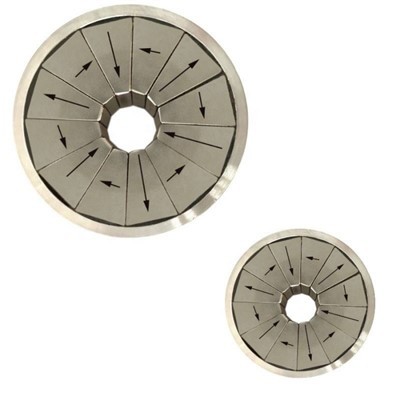
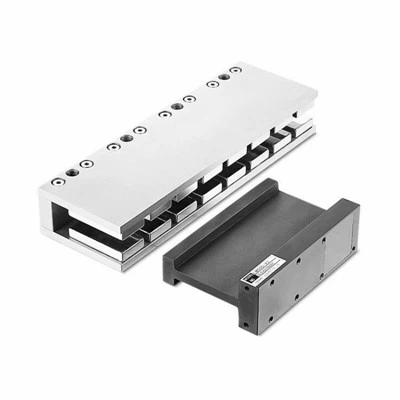
Chongqing Great Wall Technology Co., Ltd. is one of the leading manufacturers and suppliers of soft magnetic composite materials in China, also supports customized service. Welcome to wholesale high quality soft magnetic composite materials for sale here from our factory.
What Is Soft Magnetic Composite Materials
Soft Magnetic Composite materials are composite materials made up of magnetic particles and a non-conductive binder that can be molded into different shapes and sizes. These materials exhibit excellent magnetic properties, including high magnetic permeability, low core loss, and high magnetic induction. They are widely used in electromagnetic devices such as transformers, inductors, and motor cores. Soft Magnetic Composite materials have the advantage of being more cost-effective and easier to manufacture than traditional laminated magnetic cores made from steel sheets. They also have a higher energy conversion efficiency and can reduce electromagnetic interference.
Benefits of Soft Magnetic Composite Materials
Improved efficiency
Soft magnetic composite materials have high magnetic permeability and low magnetic losses, which can improve the efficiency of electrical and electronic devices.
Reduced weight and size
Soft magnetic composites are lighter and more compact than traditional magnetic materials, making them ideal for use in small, portable devices.
Enhanced electromagnetic compatibility (EMC)
SMC materials can reduce electromagnetic interference and noise, which can improve the EMC of electronic devices.
Reduced costs
Soft magnetic composite materials can be produced using low-cost fabrication techniques, reducing the manufacturing costs of electrical and electronic devices.
Better thermal management
Soft magnetic composites have good thermal conductivity, which can aid in the dissipation of heat from electrical and electronic devices.
Increased design flexibility
Soft magnetic composites can be easily molded into different shapes and sizes, allowing for greater design flexibility and customization options.


Why Choose Us
Expertise and Experience
Our team of experts have years of experience in delivering high quality services to our clients. We hire only the best professionals who have a proven track record of delivering exceptional results.
Competitive Pricing
We offer competitive pricing for our services without compromising on quality. Our prices are transparent, and we do not believe in hidden charges or fees.
Customer Satisfaction
We are committed to delivering high quality services that exceed our clients' expectations. We strive to ensure that our clients are satisfied with our services and work closely with them to ensure their needs are met.
One-stop service
We promise to provide you with the fastest reply, the best price, the best quality, and the most complete after-sales service.

Soft magnetic composite particle
Once insulated, the powder is pre-mixed with compaction lubrication to smooth the way for compaction and ejection from the die. The lube gets removed during heat treating afterward.Soft magnetic composites offer possibilities that simply didn't exist before.With the right SMC material your technology can.
Run faster
Consume far less energy
Become more compact & dense
Achieve high permeability
Use higher frequencies
Experience lower core/eddy loss
Definition: Soft magnetic composites are ferromagnetic powder particles ideally coated with a uniform layer of electrical insulating film.Keep in mind that magnetic performance is a function of.
Alloy system used
Density of final part (saturation induction and permeability are influenced by density)
Sintering temperature
Carbon and nitrogen content after sintering
Soft magnetic composites are compacted just like any other powder metal part. Heated die compaction is often used to promote higher density. As noted earlier: Higher density = higher permeability = higher induction.
Electromagnetic Properties of Soft Magnetic Composites
Over the last decade, extremely soft magnetic materials presenting Giant Magnetoimpedance (GMI) effect have gained special relevance both for sensor and smart composite applications, as well as for fundamental research in electrodynamics and magnetism. Owing to unique electromagnetic response and high frequency characteristics, soft magnetic composites can be selectively tuned for a wide variety of emerging electromagnetic devices and sensing applications.
This article collection focuses on the physics of soft magnetic materials and their electromagnetic properties. It also covers the design of highly sensitive magnetic devices and smart composite materials based on the GMI effect and state-of-the-art GMI materials.

Powder cores: These are the most common type of SMCs and are made by compressing magnetic powder into a solid core shape. Powder cores are often used in inductors and transformers because they have high permeability and low core losses.
Polymer-bonded SMCs: These materials are made by blending magnetic powder with a polymer binder. Polymer-bonded SMCs have better mechanical properties than powder cores and can be molded into various shapes.
Metal-bonded SMCs: These materials are made by blending magnetic powder with a metal binder. Metal-bonded SMCs have even better mechanical properties than polymer-bonded SMCs and can handle higher operating temperatures.
Nanocrystalline SMCs: These materials are made by embedding small magnetic particles in a nanocrystalline matrix. Nanocrystalline SMCs have high saturation flux density and low coercivity, making them useful in high-frequency applications.
Maintenance Tips for Soft Magnetic Composite Materials


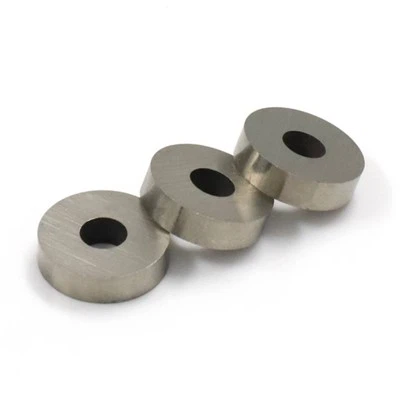
Avoid exposure to high temperatures: Soft magnetic composite materials are highly sensitive to temperature changes, particularly at high temperatures. It is recommended to avoid exposing them to temperatures exceeding 150°C. Constant high temperature exposure can cause the material to break down and lose its magnetic properties.
Keep them dry: Soft magnetic composite materials are also sensitive to moisture and can corrode easily. It is important to keep them dry and away from water. Proper storage in a dry environment is critical to ensure the long-term performance of the material.
Regular cleaning: Soft magnetic composite materials may accumulate dirt, oil, and other contaminants over time. Regular cleaning with a soft cloth or brush can help to remove these contaminants and maintain the material's performance.
Prevent mechanical damage: Soft magnetic composite materials are prone to mechanical damage, such as cracking or chipping. It is recommended to handle the material with care during installation and to avoid any impact or stress that can cause damage.
Avoid exposure to strong magnetic fields: Soft magnetic composite materials are designed to have specific magnetic properties. Exposure to strong external magnetic fields can alter these properties and negatively affect the material's performance. It is recommended to keep the material away from strong magnetic fields.
Electric Vehicle Motors: Soft magnetic composites (SMCs) can be used in the manufacture of electric vehicle (EV) motors. They are suited for this application because they exhibit excellent magnetic properties, low eddy current losses, and high magnetic permeability. This results in higher motor efficiency and improved performance as compared to other traditional materials used in the manufacture of EV motors.
Electrical Generators: SMCs can also be used for electrical generators. They exhibit high magnetic permeability, low coercivity, and low eddy current losses, resulting in high electrical efficiency. This makes them ideal for use in wind turbines, hydroelectric generators, and other types of electrical generators.
Magnetic Shields: Soft magnetic composites are used in the manufacture of magnetic shields. These shields are used to protect sensitive electronic equipment from electromagnetic interference (EMI) and magnetic field effects. Soft magnetic composites are particularly useful because they are easy to work with and can be manufactured in a wide range of sizes and shapes to suit various applications.
Sensors and Actuators: Soft magnetic composites are used in the manufacture of sensors and actuators. They exhibit good magnetic properties and low hysteresis losses, making them ideal for use in controlling movement or detecting magnetic fields.
Transformer Cores: Soft magnetic composites are used in the manufacture of transformer cores. They exhibit good magnetic properties, low hysteresis losses, and high magnetic permeability. These properties make them ideal for use in high-frequency transformers, power transformers, and other transformer applications.
Our Factory
Our magnets are mainly applied to motors and generators, such as Servo motors, Linear motors, Wind power generators, Automotive drive motors, Compressor motors, Audio equipment, Home theater, Instrumentation, Medical equipment, Automotive sensors, Wind turbines and Magnetic tools etc.

FAQ
Hot Tags: soft magnetic composite materials, China soft magnetic composite materials manufacturers, suppliers, factory, Soft Magnetic Composite Materials, Soft Magnetic Composites, Soft Magnetic Composites, SMC Material