


As a leading supplier of magnetic couplings, I've witnessed firsthand the transformative impact these devices have on various industrial systems. One of the most critical aspects that industries often overlook is the influence of magnetic couplings on the system's power factor. In this blog post, I'll delve into the intricacies of this relationship, exploring how magnetic couplings can enhance or detract from power factor performance.

Understanding Power Factor
Before we dive into the influence of magnetic couplings, it's essential to understand what power factor is and why it matters. Power factor is a measure of how effectively electrical power is being used in a system. It is the ratio of real power (measured in kilowatts, kW) to apparent power (measured in kilovolt - amperes, kVA). A power factor of 1 (or 100%) indicates that all the electrical power supplied to the system is being used effectively, while a lower power factor means that a significant portion of the power is being wasted.
Low power factor can lead to several issues, including increased energy consumption, higher electricity bills, and additional stress on electrical equipment. Utilities often charge industrial customers penalties for low power factor, making it a crucial consideration for businesses looking to optimize their energy usage and reduce costs.
How Magnetic Couplings Work
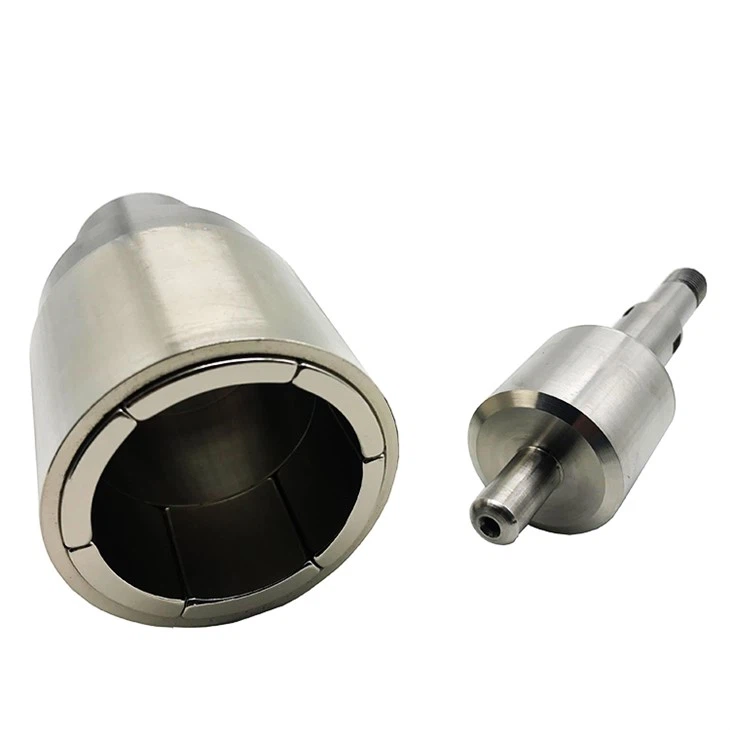
Magnetic couplings are devices that use magnetic fields to transfer torque from a driving shaft to a driven shaft without any physical contact between the two. This non - contact design offers several advantages, such as eliminating the need for mechanical seals, reducing maintenance requirements, and providing a high degree of isolation between the driving and driven sides of the system.
There are different types of magnetic couplings available, each with its own unique characteristics and applications. For example, Linear Magnetic Couplings are designed for linear motion applications, while Permanent Magnetic Couplings use permanent magnets to transfer torque. Magnetic Couplings Unthreaded Hole Type are suitable for specific mounting requirements.
Positive Influence on Power Factor
One of the primary ways magnetic couplings can positively influence the system's power factor is by reducing the amount of reactive power in the system. Reactive power is the power that is stored and released in the magnetic and electric fields of inductive and capacitive components in the system. Inductive loads, such as motors, are a common source of reactive power, which can cause the power factor to drop.
Magnetic couplings can help reduce reactive power by providing a more efficient means of torque transfer. Since there is no physical contact between the driving and driven shafts, there is less mechanical friction and wear, which can lead to a more stable and efficient operation of the motor. This, in turn, can result in a lower demand for reactive power and an improved power factor.
In addition, magnetic couplings can also help to isolate the motor from mechanical vibrations and shocks in the system. By reducing the stress on the motor, the motor can operate more efficiently, which can also contribute to an improved power factor.
Negative Influence on Power Factor
While magnetic couplings generally have a positive impact on power factor, there are some situations where they can have a negative influence. For example, if the magnetic coupling is not properly sized or installed, it can introduce additional inductance into the system. This additional inductance can increase the reactive power demand and lower the power factor.
Another factor that can affect the power factor is the quality of the magnetic materials used in the coupling. Low - quality magnetic materials may have higher magnetic losses, which can also lead to an increase in reactive power and a decrease in power factor.
Case Studies
To illustrate the influence of magnetic couplings on power factor, let's look at a few case studies. In a chemical processing plant, a traditional mechanical coupling was replaced with a magnetic coupling in a pump system. Before the replacement, the power factor of the pump system was around 0.75. After the installation of the magnetic coupling, the power factor improved to 0.92. This improvement was mainly due to the reduced mechanical losses and the more efficient torque transfer provided by the magnetic coupling.
In another case, a food processing plant installed a magnetic coupling in a conveyor system. The initial power factor of the conveyor system was 0.8. After the installation, the power factor increased to 0.9. The plant was able to reduce its energy consumption and avoid power factor penalties, resulting in significant cost savings.
Optimizing Power Factor with Magnetic Couplings
To ensure that magnetic couplings have a positive influence on the system's power factor, it's important to follow some best practices. First, proper sizing and selection of the magnetic coupling are crucial. The coupling should be sized based on the torque requirements of the system and the operating conditions.
Second, high - quality magnetic materials should be used in the coupling. High - quality materials have lower magnetic losses, which can help to reduce reactive power and improve power factor.
Third, regular maintenance and inspection of the magnetic coupling are necessary. This includes checking for any signs of wear or damage, and ensuring that the coupling is properly aligned and installed.
Conclusion
In conclusion, magnetic couplings can have a significant influence on the system's power factor. When properly sized, installed, and maintained, they can help to improve power factor, reduce energy consumption, and lower electricity costs. However, it's important to be aware of the potential negative impacts and take steps to mitigate them.
As a supplier of magnetic couplings, we are committed to providing our customers with high - quality products and expert advice on optimizing power factor. Whether you're looking for Linear Magnetic Couplings, Permanent Magnetic Couplings, or Magnetic Couplings Unthreaded Hole Type, we have the right solution for your application.
If you're interested in learning more about how magnetic couplings can improve your system's power factor or if you're ready to discuss your specific requirements, we invite you to contact us for a detailed consultation. Our team of experts is here to help you find the best solution for your needs and ensure that you get the most out of your magnetic coupling investment.
References
- IEEE Standard 141 - 1993, "Recommended Practice for Electric Power Distribution for Industrial Plants"
- "Power System Analysis and Design" by J. Duncan Glover, Mulukutla S. Sarma, and Thomas J. Overbye
- Manufacturer's technical manuals on magnetic couplings


