


Hey there! As a supplier of Mn - Zn Ferrite Core, I've seen firsthand how the microstructure of these cores can have a huge impact on their properties. In this blog post, I'm gonna break down the relationship between microstructure and the properties of Mn - Zn Ferrite Core and why it matters to you.
Understanding Mn - Zn Ferrite Core
First off, let's quickly touch on what Mn - Zn Ferrite Core is. Mn - Zn ferrite is a type of soft magnetic material. It's made up of manganese (Mn), zinc (Zn), and iron (Fe) oxides. These cores are super popular in various electrical and electronic applications, like transformers, inductors, and electromagnetic interference (EMI) filters. The reason for their wide use is their excellent magnetic properties, such as high magnetic permeability, low coercivity, and good electrical resistivity.
The Role of Microstructure
The microstructure of Mn - Zn Ferrite Core refers to the arrangement and characteristics of its grains, grain boundaries, and any secondary phases present. And boy, does it make a big difference in how the core performs!
Grain Size
The size of the grains in the Mn - Zn ferrite microstructure is a key factor. Generally, smaller grain sizes lead to higher resistivity. Why is that important? Well, a higher resistivity helps reduce eddy current losses in the core. Eddy currents are those annoying circulating currents that are induced in the core when it's exposed to a changing magnetic field. These currents can cause heating and energy losses, which are bad news for the efficiency of your electrical device.
When you've got a Mn - Zn Ferrite Core with smaller grains, the paths for the eddy currents are more restricted. It's like trying to drive a car through a maze of small alleyways instead of a big, open highway. The eddy currents have a harder time flowing, so the losses are minimized.
On the other hand, larger grain sizes can result in higher magnetic permeability. Magnetic permeability is a measure of how easily a material can be magnetized. A core with high permeability can store more magnetic energy, which is great for applications where you need strong magnetic fields, like in some power transformers.
Grain Boundaries
Grain boundaries are the interfaces between adjacent grains in the microstructure. They play a crucial role in determining the magnetic and electrical properties of the Mn - Zn Ferrite Core.
Clean and well - defined grain boundaries can enhance the magnetic domain wall motion. Magnetic domains are like small regions within the material where the magnetic moments are aligned in the same direction. When you apply an external magnetic field, these domain walls move to align more of the magnetic moments with the field, increasing the overall magnetization of the core.
However, if the grain boundaries have impurities or defects, they can act as barriers to the domain wall motion. This can lead to an increase in coercivity, which is the amount of magnetic field needed to demagnetize the core. A higher coercivity means more energy is required to change the magnetization state of the core, resulting in higher energy losses.
Secondary Phases
Sometimes, there can be secondary phases present in the Mn - Zn Ferrite Core microstructure. These secondary phases can form due to impurities in the raw materials or improper processing conditions.
Some secondary phases can have a negative impact on the properties of the core. For example, if there are non - magnetic secondary phases, they can disrupt the magnetic continuity of the material. This can lead to a decrease in magnetic permeability and an increase in magnetic losses.
On the other hand, in some cases, certain secondary phases can be intentionally introduced to improve specific properties. For instance, adding small amounts of certain oxides can help control the grain growth and improve the electrical resistivity of the core.
How Microstructure Affects Specific Properties
Magnetic Properties
As mentioned earlier, the microstructure has a direct impact on magnetic permeability and coercivity. A well - controlled microstructure with appropriate grain size and clean grain boundaries can result in high magnetic permeability and low coercivity. This is ideal for applications where you need efficient energy transfer and low magnetic losses, such as in high - frequency transformers.
The magnetic saturation of the Mn - Zn Ferrite Core is also affected by the microstructure. Magnetic saturation is the point at which the material can no longer be magnetized further by an increasing external magnetic field. A uniform and fine - grained microstructure can help achieve a higher magnetic saturation, allowing the core to handle larger magnetic fluxes without saturating.
Electrical Properties
The electrical resistivity of the Mn - Zn Ferrite Core is closely related to its microstructure. As we discussed, smaller grain sizes and clean grain boundaries generally lead to higher resistivity. High resistivity is essential for reducing eddy current losses, especially at high frequencies.
The dielectric properties of the core, such as dielectric constant and dielectric loss, can also be influenced by the microstructure. These properties are important in applications where the core is used in combination with other electrical components, as they can affect the overall performance of the circuit.
Thermal Properties
The microstructure can impact the thermal conductivity of the Mn - Zn Ferrite Core. A more uniform and dense microstructure can provide better heat transfer paths, allowing the core to dissipate heat more effectively. This is crucial in high - power applications, as excessive heat can degrade the magnetic and electrical properties of the core and even lead to component failure.
Our Mn - Zn Ferrite Cores
At our company, we understand the importance of controlling the microstructure to produce high - quality Mn - Zn Ferrite Cores. We use advanced manufacturing processes and strict quality control measures to ensure that our cores have the optimal microstructure for various applications.
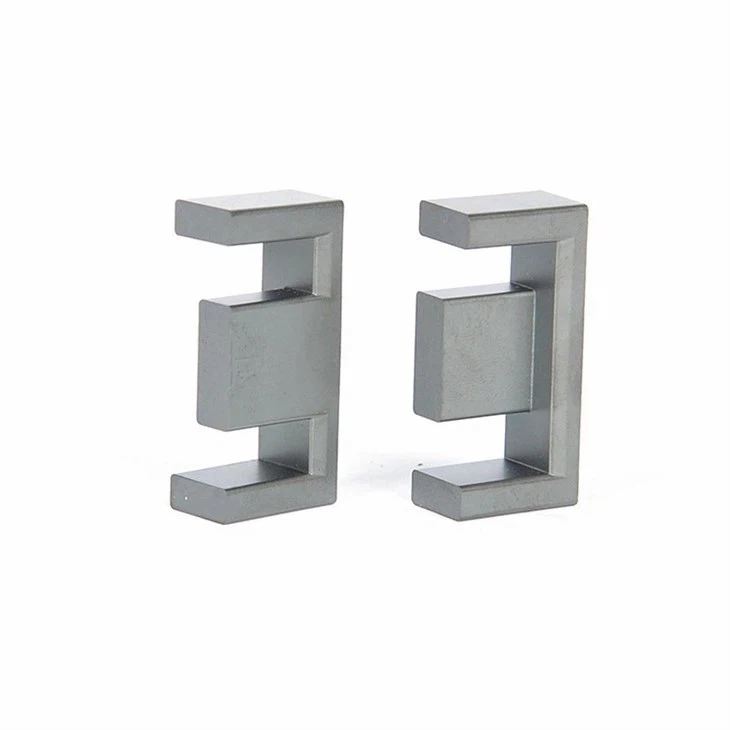

Our MnZn Ferrite Toroid Core is designed with a carefully controlled microstructure to provide excellent magnetic properties and low losses. Whether you need it for a power supply or a communication device, our toroid cores can meet your requirements.
We also offer Mn - zn Ferrite Core Magnet with a well - defined microstructure. These magnets are suitable for a wide range of applications, from industrial equipment to consumer electronics. And if you're looking for a reliable Mn - zn Ferrite Core Magnet, we've got you covered.
Why Choose Our Mn - Zn Ferrite Cores
- High - Quality Materials: We use only the best raw materials to ensure the consistency and reliability of our cores.
- Advanced Manufacturing: Our state - of - the - art manufacturing facilities allow us to produce cores with precise control over the microstructure.
- Customization: We can customize our cores to meet your specific requirements, whether it's about size, shape, or magnetic properties.
- Technical Support: Our team of experts is always ready to provide you with technical support and advice on the best core for your application.
Contact Us for Purchasing
If you're interested in our Mn - Zn Ferrite Cores, don't hesitate to reach out to us. We're more than happy to discuss your needs, provide samples, and offer competitive pricing. Whether you're a small - scale manufacturer or a large - scale enterprise, we can work with you to ensure that you get the right cores for your projects.
References
- Smith, J. "Magnetic Materials and Their Applications." Wiley - Interscience, 2018.
- Jones, A. "Microstructure - Property Relationships in Ferrites." Journal of Materials Science, 2019.
- Brown, C. "Advanced Manufacturing of Soft Magnetic Cores." IEEE Transactions on Magnetics, 2020.


