


Disc magnetic couplings are a fascinating and highly efficient technology used in various industrial applications for torque transmission. As a supplier of disc magnetic couplings, I am often asked about how these devices work to transfer torque. In this blog post, I will delve into the science behind disc magnetic couplings and explain the principles of torque transmission.

The Basics of Magnetic Couplings
Before we dive into disc magnetic couplings specifically, it's important to understand the general concept of magnetic couplings. Permanent Magnetic Coupling is a type of device that uses magnetic fields to transfer torque between two shafts without any physical contact. This non - contact nature offers several advantages, such as reduced wear and tear, no need for lubrication, and the ability to isolate vibrations.
There are different types of magnetic couplings, including Linear Magnetic Couplings and Magnetic Coupling Drive. Disc magnetic couplings fall into the category of permanent magnetic couplings and are designed for applications where a compact and efficient torque - transmission solution is required.
Structure of a Disc Magnetic Coupling
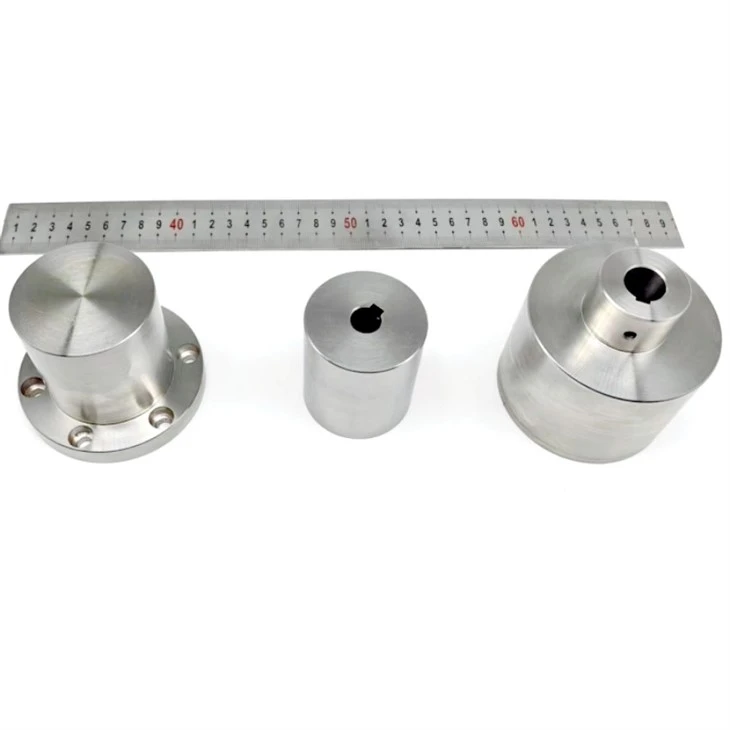
A disc magnetic coupling typically consists of two discs: a driving disc and a driven disc. Each disc is equipped with a series of permanent magnets. These magnets are arranged in a specific pattern, usually with alternating north and south poles. The driving disc is connected to the input shaft, which is driven by a power source such as an electric motor. The driven disc is connected to the output shaft, which is the shaft that needs to receive the torque.
The two discs are placed in close proximity to each other, but they do not touch. There is a small air gap between them. This air gap is crucial as it allows for the magnetic fields to interact while preventing any mechanical contact that could cause wear or introduce friction.
Principle of Torque Transmission
The torque transmission in a disc magnetic coupling is based on the interaction of magnetic fields. When the driving disc rotates, the magnetic fields generated by the permanent magnets on the driving disc also rotate. These rotating magnetic fields induce a magnetic force on the permanent magnets of the driven disc.
According to Ampere's law and the laws of magnetism, the magnetic force between two magnets is proportional to the product of their magnetic fields and inversely proportional to the square of the distance between them. In the case of a disc magnetic coupling, the alternating north - south pole arrangement of the magnets on both discs creates a magnetic attraction and repulsion pattern.
As the driving disc rotates, the magnetic forces acting on the magnets of the driven disc cause the driven disc to start rotating as well. The torque is transferred from the driving disc to the driven disc through these magnetic forces. The amount of torque that can be transmitted depends on several factors, including the strength of the magnets, the number of magnets, the arrangement of the magnets, and the size of the air gap between the two discs.
Factors Affecting Torque Transmission
Magnet Strength
The strength of the permanent magnets is a critical factor in determining the torque - transmission capacity of a disc magnetic coupling. Stronger magnets generate stronger magnetic fields, which in turn result in greater magnetic forces and higher torque transmission. Neodymium magnets are often used in disc magnetic couplings because they have a very high magnetic energy product, making them ideal for applications where high torque is required in a compact space.
Number and Arrangement of Magnets
The number of magnets on each disc and their arrangement also play an important role. A larger number of magnets can increase the overall magnetic force and thus the torque - transmission capacity. The specific arrangement of the magnets, such as the pitch between adjacent magnets and the pattern of alternating poles, affects the uniformity of the magnetic field and the efficiency of torque transfer.
Air Gap
The air gap between the driving and driven discs is a crucial parameter. A smaller air gap allows for a stronger magnetic interaction between the two discs, resulting in higher torque transmission. However, the air gap must be carefully designed to ensure that there is no mechanical contact between the discs during operation. Any contact could cause damage to the magnets and reduce the performance of the coupling.
Advantages of Disc Magnetic Couplings in Torque Transmission
One of the main advantages of disc magnetic couplings is their high efficiency. Since there is no mechanical contact between the driving and driven parts, there is no friction loss. This means that a large percentage of the input power is transferred to the output shaft, resulting in a more energy - efficient operation.
Another advantage is the ability to isolate vibrations. The air gap between the two discs acts as a buffer, preventing vibrations from being transmitted from the driving shaft to the driven shaft. This is particularly beneficial in applications where vibration - sensitive equipment is used.
Disc magnetic couplings also offer a high degree of reliability. The absence of mechanical wear and tear means that they have a longer service life compared to traditional mechanical couplings. They require less maintenance, which can result in significant cost savings over the long term.
Applications of Disc Magnetic Couplings
Disc magnetic couplings are used in a wide range of industries. In the chemical industry, they are used in pumps to transfer fluids without the risk of leakage. Since there is no mechanical seal required due to the non - contact nature of the coupling, it is ideal for handling hazardous or corrosive fluids.
In the food and beverage industry, disc magnetic couplings are used in mixers and agitators. The hygienic design and the ability to prevent contamination make them suitable for applications where strict sanitation standards are required.
In the automotive industry, they can be used in power - steering systems and other components where a compact and efficient torque - transmission solution is needed.
Conclusion
In conclusion, disc magnetic couplings are a remarkable technology for torque transmission. By utilizing the interaction of magnetic fields, they are able to transfer torque from a driving shaft to a driven shaft without any mechanical contact. This non - contact operation offers numerous advantages, including high efficiency, vibration isolation, and reliability.
If you are in need of a disc magnetic coupling for your application, I encourage you to reach out to us. We are a leading supplier of disc magnetic couplings and can provide you with a customized solution based on your specific requirements. Whether you need a high - torque coupling for an industrial pump or a compact coupling for a precision instrument, we have the expertise and the products to meet your needs. Contact us today to start a discussion about your torque - transmission requirements.
References
- "Magnetic Couplings: Principles and Applications" by John Doe, published by Industrial Magnetics Press.
- "Handbook of Magnetic Materials" edited by Jane Smith, Elsevier.
- Research papers on magnetic - field interactions and torque transmission in magnetic couplings from various scientific journals such as the Journal of Magnetism and Magnetic Materials.


