


Hey there! As a supplier of Magnet Halbach Arrays, I often get asked about how to test the performance of these nifty magnetic setups. In this blog, I'll walk you through the ins and outs of testing a Magnet Halbach Array, sharing some tips and tricks I've picked up over the years.
First off, let's understand what a Magnet Halbach Array is. It's a special arrangement of permanent magnets that creates a strong magnetic field on one side while significantly reducing it on the other. This unique property makes it super useful in various applications, from electric motors to magnetic levitation systems. There are different types of Halbach Arrays, like the Axial Flux Halbach Array and the Cylindrical Halbach Array, each with its own design and use cases. The way the magnets are arranged in a Halbach Array, known as Halbach Array Arrangement, is crucial for its performance.
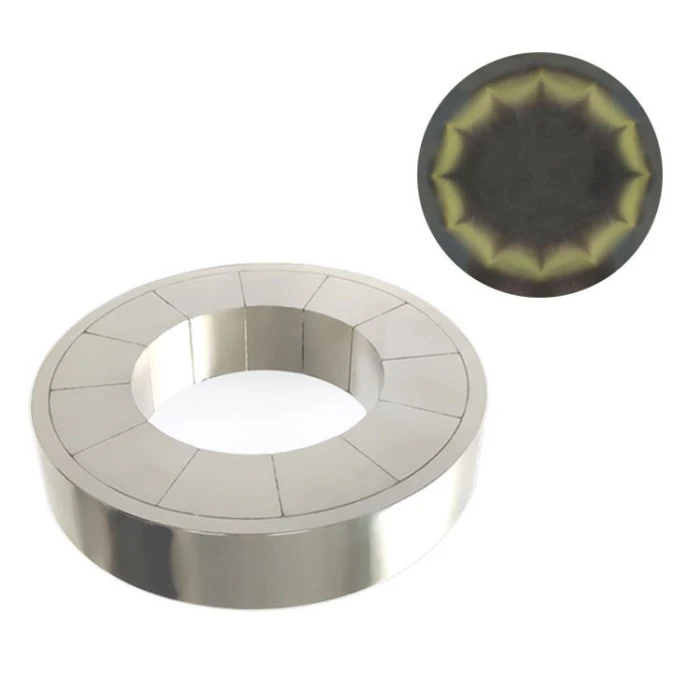

1. Initial Visual Inspection
Before you start any fancy testing, give the Halbach Array a good once - over. Look for any obvious signs of damage, like cracked magnets or loose connections. Magnets can get chipped during handling or shipping, and a damaged magnet can throw off the whole array's performance. Check the alignment of the magnets too. In a Halbach Array, the precise orientation of each magnet is key. If a magnet is even slightly out of place, it can reduce the strength of the magnetic field on the desired side.
2. Measuring Magnetic Field Strength
One of the most important aspects of testing a Halbach Array is measuring its magnetic field strength. You'll need a gaussmeter for this. A gaussmeter is a device that measures the magnetic field intensity in gauss or tesla.
- Surface Measurement: Place the gaussmeter probe on the surface of the array where you expect the strongest magnetic field. Take multiple readings at different points across the surface. This will give you an idea of how uniform the magnetic field is. A well - functioning Halbach Array should have a relatively consistent magnetic field strength across its surface.
- Distance Measurement: Move the gaussmeter probe away from the array at a perpendicular angle. Record the magnetic field strength at various distances. You can then plot a graph of magnetic field strength versus distance. This will help you understand how the magnetic field decays as you move away from the array. In a good Halbach Array, the field should decay rapidly on the weak side and be more stable on the strong side.
3. Testing for Field Direction
The direction of the magnetic field in a Halbach Array is just as important as its strength. You can use a small compass to get a rough idea of the field direction. Place the compass near the array and observe which way the needle points. For more accurate measurements, you can use a 3 - axis magnetometer. This device can measure the magnetic field components in three different directions (x, y, and z). By analyzing these components, you can determine the exact direction of the magnetic field at any point around the array.
4. Thermal Testing
Temperature can have a significant impact on the performance of a Magnet Halbach Array. As the temperature rises, the magnetic properties of the magnets can change. To test the thermal performance of the array, you can use a thermal camera or temperature sensors.
- Operating Temperature Range: First, find out the operating temperature range specified by the manufacturer. Then, heat or cool the array within this range and measure the magnetic field strength at different temperatures. This will help you understand how the array's performance changes with temperature.
- Thermal Stability: Keep the array at a constant temperature for an extended period and monitor the magnetic field strength. A stable Halbach Array should maintain its performance over time, even at different temperatures.
5. Dynamic Testing
In many real - world applications, the Halbach Array will be subjected to dynamic conditions, like rotation or vibration. To simulate these conditions, you can use a test rig.
- Rotation Testing: If the array is going to be used in a rotating device, like an electric motor, mount it on a rotating platform. Measure the magnetic field strength and direction while the array is rotating. This will help you identify any issues that might arise due to rotation, such as changes in the magnetic field pattern.
- Vibration Testing: Attach the array to a vibration table and subject it to different levels of vibration. Monitor the magnetic field during the vibration test. Vibration can cause the magnets to shift or become misaligned, which can affect the array's performance.
6. Electrical Testing (if applicable)
Some Halbach Arrays are used in applications where they interact with electrical currents, like in generators or motors. In these cases, you'll need to perform electrical testing.
- Inductance Measurement: Use an LCR meter to measure the inductance of the array. Inductance is a measure of how much the array resists changes in electrical current. A consistent inductance value is a sign of a well - functioning array.
- Resistance Measurement: Measure the electrical resistance of the array. Any significant changes in resistance could indicate a problem, like a short - circuit or an open - circuit in the electrical connections.
7. Long - Term Performance Testing
Testing the array over a long period can give you a better understanding of its durability and reliability. Set up a test bench where the array can operate under normal conditions for weeks or even months. Continuously monitor the magnetic field strength, temperature, and any other relevant parameters. Look for any trends or changes in the performance over time. This long - term testing can help you catch any potential issues that might not show up in short - term tests.
Conclusion
Testing the performance of a Magnet Halbach Array is a multi - step process that involves a combination of visual inspection, magnetic field measurement, thermal testing, and more. By following these steps, you can ensure that the array meets your requirements and performs reliably in your application.
If you're in the market for a high - quality Magnet Halbach Array, we're here to help. We've got a wide range of arrays to suit different needs, and our team can provide you with all the technical support you need. Whether you're working on a small research project or a large - scale industrial application, we can offer the right solution for you. Get in touch with us to start a procurement discussion and find out how our Magnet Halbach Arrays can enhance your project.
References
- Handbook of Magnetic Materials
- Journal of Applied Magnetics
- IEEE Transactions on Magnetics


