


What is the coercive force temperature coefficient of Samarium Cobalt Magnets?
As a dedicated supplier of Samarium Cobalt Magnets, I'm often asked about the technical aspects of these remarkable magnetic materials. One particularly important parameter is the coercive force temperature coefficient. In this blog post, I'll delve into what this coefficient means, why it's crucial, and how it impacts the performance of Samarium Cobalt Magnets.
Understanding Coercive Force
Before we discuss the temperature coefficient, let's first understand what coercive force is. Coercive force, denoted as Hc, is a measure of the magnetic field intensity required to reduce the magnetization of a magnet to zero after it has been magnetized to saturation. In simpler terms, it represents the magnet's ability to resist demagnetization. A higher coercive force means that the magnet is more resistant to external magnetic fields or other factors that could cause it to lose its magnetization.
The Concept of Temperature Coefficient
The temperature coefficient is a measure of how a particular property of a material changes with temperature. In the case of Samarium Cobalt Magnets, the coercive force temperature coefficient (αHc) indicates how the coercive force of the magnet varies as the temperature changes. It is usually expressed as a percentage change per degree Celsius (°C).
For example, if a Samarium Cobalt Magnet has a coercive force temperature coefficient of -0.03%/°C, it means that for every 1°C increase in temperature, the coercive force of the magnet will decrease by 0.03%. Conversely, for every 1°C decrease in temperature, the coercive force will increase by 0.03%.
Importance of the Coercive Force Temperature Coefficient
The coercive force temperature coefficient is a critical parameter for several reasons. Firstly, it affects the stability of the magnet's performance over a wide range of temperatures. In many applications, Samarium Cobalt Magnets are exposed to varying temperatures, and it's essential that their magnetic properties remain relatively constant. A high absolute value of the temperature coefficient means that the coercive force will change significantly with temperature, which can lead to inconsistent performance.

Secondly, understanding the temperature coefficient is crucial for designing magnetic systems. Engineers need to know how the magnet's coercive force will change with temperature to ensure that the system operates within its specified parameters. For example, in a high - temperature application such as a motor in an aerospace or industrial environment, a magnet with a low absolute value of the coercive force temperature coefficient is preferred to prevent demagnetization and maintain efficient operation.
Coercive Force Temperature Coefficient of Samarium Cobalt Magnets
Samarium Cobalt Magnets are known for their excellent temperature stability compared to other types of permanent magnets, such as neodymium magnets. The coercive force temperature coefficient of Samarium Cobalt Magnets typically ranges from approximately -0.02%/°C to -0.04%/°C. This relatively low value indicates that the coercive force of Samarium Cobalt Magnets changes only slightly with temperature variations.
The reason for this good temperature stability lies in the crystal structure and the magnetic properties of Samarium Cobalt alloys. These alloys have a high Curie temperature, which is the temperature above which the material loses its ferromagnetic properties. The high Curie temperature of Samarium Cobalt Magnets (usually above 700°C) allows them to maintain their magnetic properties at elevated temperatures.
Applications and the Impact of Temperature Coefficient
The stable coercive force temperature coefficient of Samarium Cobalt Magnets makes them suitable for a wide range of applications.
Aerospace and Aviation
In aerospace and aviation applications, components are often exposed to extreme temperature variations. Samarium Cobalt Magnets are used in motors, actuators, and sensors. The low temperature coefficient ensures that the magnets maintain their magnetic strength and performance, even when the aircraft experiences rapid temperature changes during flight.
High - Temperature Industrial Processes
In industrial settings, such as in furnaces or high - temperature manufacturing processes, Samarium Cobalt Magnets can be used in magnetic separators, magnetic couplings, and other equipment. Their ability to resist demagnetization at high temperatures due to the stable coercive force temperature coefficient is essential for reliable operation.
Medical Devices
Medical devices, such as MRI machines and some types of sensors, require magnets with stable magnetic properties. The temperature stability provided by the low coercive force temperature coefficient of Samarium Cobalt Magnets makes them a good choice for these applications, ensuring accurate and consistent performance.
Our Samarium Cobalt Magnet Products
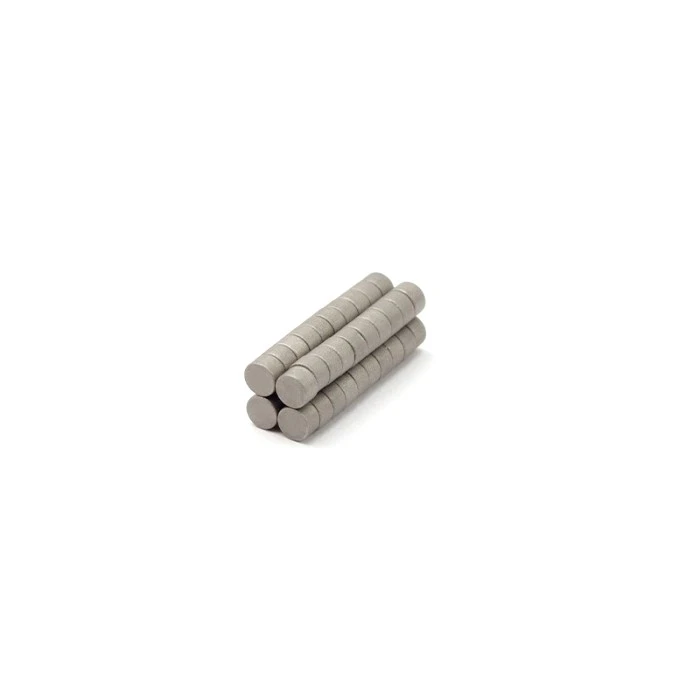
As a supplier, we offer a variety of Samarium Cobalt Magnet products, including Samarium Cobalt Disc Magnet, Smco Ring Magnet, and SmCo Arc Magnet. These products are carefully manufactured to ensure high quality and consistent performance, with a focus on maintaining the desired coercive force temperature coefficient.
Contact Us for Procurement
If you are interested in purchasing Samarium Cobalt Magnets for your specific application, we are here to help. Our team of experts can provide detailed information about the coercive force temperature coefficient and other technical parameters of our products. We can also offer customized solutions to meet your unique requirements. Whether you need a small quantity for research or a large - scale production order, we are committed to providing you with the best products and services.
References
- Handbook of Magnetic Materials, edited by K. H. J. Buschow, Elsevier
- Permanent Magnet Materials and Their Applications, by B. D. Cullity and C. D. Graham, Wiley - IEEE Press


