


As a supplier of MnZn Ferrite Core, ensuring the quality of our products is of utmost importance. High - quality MnZn ferrite cores are crucial for various applications in the electronics industry, such as power supplies, transformers, and inductors. In this blog, I will share some effective methods on how to test the quality of MnZn Ferrite Core.
Physical Inspection
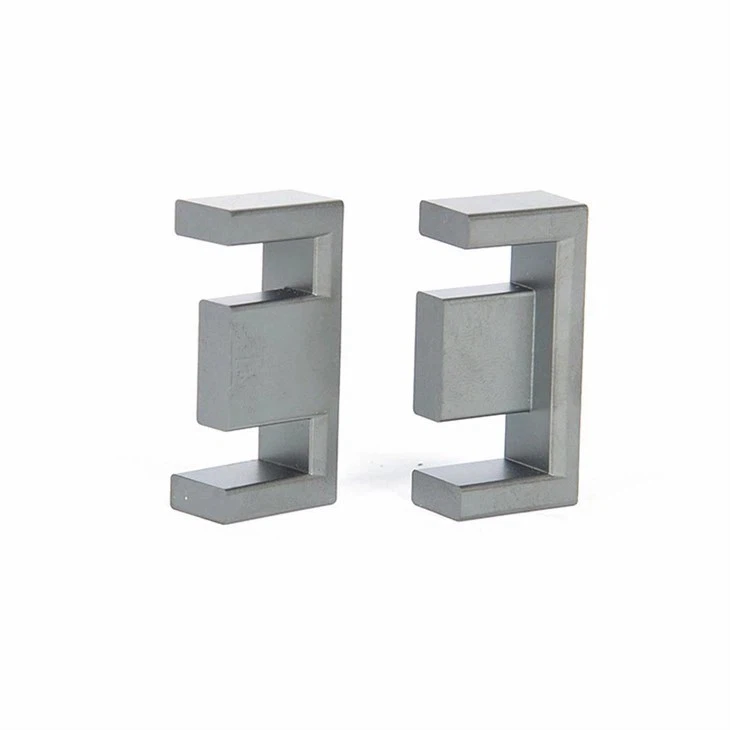
The first step in testing the quality of MnZn Ferrite Core is a physical inspection. This involves a visual check of the core's appearance. A high - quality MnZn Ferrite Core should have a smooth surface without any visible cracks, chips, or scratches. Cracks can significantly affect the magnetic properties of the core and may lead to premature failure in applications.
We also need to measure the dimensions of the core accurately. Any deviation from the specified dimensions can cause problems in the assembly of electronic components. For example, if the core is too large or too small, it may not fit properly in the transformer or inductor housing. We use precision measuring tools like calipers and micrometers to ensure that the core meets the required dimensional tolerances.
Magnetic Property Testing
Magnetic properties are the most critical aspects of MnZn Ferrite Core. The main magnetic properties that need to be tested include initial permeability (μi), saturation flux density (Bs), remanence (Br), and coercivity (Hc).
Initial Permeability (μi)
Initial permeability is a measure of how easily a magnetic field can be established in the ferrite core when a small magnetic field is applied. To measure the initial permeability, we use an LCR meter. The core is wound with a certain number of turns of wire to form an inductor. The LCR meter measures the inductance of the coil at a low - frequency signal (usually around 1 kHz). Then, the initial permeability can be calculated using the formula:
[ \mu_{i}=\frac{L\times l}{N^{2}\times A\times\mu_{0}} ]
where (L) is the measured inductance, (l) is the mean magnetic path length of the core, (N) is the number of turns of the winding, (A) is the cross - sectional area of the core, and (\mu_{0}) is the permeability of free space ((\mu_{0} = 4\pi\times10^{- 7}H/m)).
A high - quality MnZn ferrite core should have a stable and high initial permeability within the specified frequency range. Deviations in initial permeability can lead to changes in the performance of the magnetic components, such as changes in the resonant frequency of the circuit.
Saturation Flux Density (Bs)
Saturation flux density is the maximum magnetic flux density that the ferrite core can reach before it saturates. When the core saturates, its magnetic properties change significantly, and the inductance of the coil decreases rapidly. To measure the saturation flux density, we use a B - H analyzer.
The core is wound with a primary and a secondary winding. A sinusoidal current is applied to the primary winding to generate a magnetic field in the core. The secondary winding is used to measure the induced voltage, which is proportional to the rate of change of the magnetic flux in the core. By integrating the induced voltage, we can obtain the magnetic flux density (B). At the same time, the current in the primary winding is measured to calculate the magnetic field strength (H).
The B - H curve is plotted, and the saturation flux density is determined as the value of B when the curve starts to flatten out. A high saturation flux density is desirable for applications where high - power handling is required, such as in power transformers.
Remanence (Br) and Coercivity (Hc)
Remanence is the magnetic flux density that remains in the core when the applied magnetic field is removed. Coercivity is the magnetic field strength required to reduce the remanence to zero. These two parameters are also measured using the B - H analyzer.
A low remanence and coercivity are preferred for most applications. Low remanence means that the core can be easily demagnetized, and low coercivity implies that less energy is required to change the magnetic state of the core. This is important for reducing power losses in magnetic components.
Electrical Property Testing
In addition to magnetic properties, the electrical properties of MnZn Ferrite Core also need to be tested. The main electrical property is the resistivity of the core.
Resistivity
The resistivity of the ferrite core affects the eddy - current losses in the core. Eddy - current losses occur when a changing magnetic field induces circulating currents (eddy currents) in the core. These losses increase with the square of the frequency and can cause overheating and reduced efficiency of the magnetic components.
To measure the resistivity, we use a four - point probe method. Four probes are placed on the surface of the core, and a current is passed through the outer two probes. The voltage is measured between the inner two probes. The resistivity can be calculated using the formula:
[ \rho=\frac{V}{I}\times\frac{2\pi s}{\ln2} ]
where (V) is the measured voltage, (I) is the applied current, and (s) is the distance between the probes.
A high resistivity is desirable for reducing eddy - current losses, especially in high - frequency applications.
Temperature Stability Testing
MnZn Ferrite Core is often used in applications where the temperature can vary significantly. Therefore, it is important to test the temperature stability of the core's magnetic and electrical properties.
We use a temperature - controlled oven to vary the temperature of the core while measuring its properties. For example, we measure the initial permeability, saturation flux density, and resistivity at different temperatures within the operating temperature range of the application.
The temperature coefficient of these properties can be calculated. A low temperature coefficient indicates that the properties of the core change minimally with temperature, which is essential for maintaining the stability of the performance of the magnetic components over a wide temperature range.
Chemical Composition Analysis
The chemical composition of MnZn Ferrite Core has a significant impact on its properties. The main elements in MnZn ferrite are manganese (Mn), zinc (Zn), and iron (Fe), along with some trace elements.
We use techniques like X - ray fluorescence (XRF) or inductively coupled plasma - mass spectrometry (ICP - MS) to analyze the chemical composition of the core. These methods can accurately determine the content of each element in the core.
The correct chemical composition is crucial for achieving the desired magnetic and electrical properties. For example, the ratio of Mn to Zn affects the initial permeability and the saturation flux density of the core.
Conclusion
Testing the quality of MnZn Ferrite Core is a comprehensive process that involves physical, magnetic, electrical, thermal, and chemical analyses. By using these testing methods, we can ensure that our Mn - zn Ferrite Core Magnet and MnZn Ferrite Toroid Core meet the high - quality standards required by our customers.
If you are in the market for high - quality MnZn Ferrite Core for your electronic applications, we invite you to contact us for procurement and further discussions. We are committed to providing you with the best products and services.

References
- Cullity, B. D., & Graham, C. D. (2008). Introduction to Magnetic Materials. Wiley - Interscience.
- Zverev, A. I. (1967). Handbook of Filter Synthesis. Wiley.
- Snelling, E. C. (1988). Soft Ferrites: Properties and Applications. Butterworth - Heinemann.


