


Hey there! As a supplier of Alnico Bar Magnets, I often get asked about how the magnetization process of these awesome magnets works. So, I thought I'd take a moment to break it down for you in a way that's easy to understand.
First off, let's talk a bit about what Alnico is. Alnico is an alloy made up of aluminum (Al), nickel (Ni), and cobalt (Co), along with some other elements like iron, copper, and sometimes titanium. It's known for its high magnetic strength and excellent temperature stability, which makes it a popular choice for a wide range of applications, from electric motors and generators to speakers and sensors.
Now, let's dive into the magnetization process. The magnetization of an Alnico bar magnet is a multi - step process that involves both heat treatment and exposure to a strong magnetic field.
The first step is the melting and casting of the Alnico alloy. We start by melting the raw materials in a furnace at a very high temperature, usually around 1600 - 1700 degrees Celsius. Once the alloy is completely melted, it's poured into a mold to form the desired shape, in this case, a bar magnet. This casting process is crucial because it helps to ensure the proper distribution of the elements within the alloy, which in turn affects the magnetic properties of the final magnet.
After the casting is complete, the next step is heat treatment. Heat treatment is a critical part of the magnetization process as it helps to align the magnetic domains within the Alnico alloy. Magnetic domains are tiny regions within the material where the magnetic moments of the atoms are aligned in the same direction. When these domains are randomly oriented, the material has no net magnetic field. But when they're aligned, the material becomes magnetic.
The heat treatment process typically involves heating the Alnico bar magnet to a specific temperature, usually between 800 and 1000 degrees Celsius, and then slowly cooling it in the presence of a strong magnetic field. This slow cooling process, known as annealing, allows the magnetic domains to align themselves with the external magnetic field. The strength and direction of the external magnetic field determine the polarity and strength of the final magnet.
There are different types of heat treatment methods that can be used, such as normalizing, quenching, and aging. Normalizing involves heating the magnet to a high temperature and then cooling it in air. Quenching, on the other hand, involves rapidly cooling the magnet in a liquid, such as oil or water. Aging is a process where the magnet is heated to a lower temperature for a longer period of time to further enhance its magnetic properties.
Once the heat treatment is complete, the Alnico bar magnet is ready for the final magnetization step. In this step, the magnet is placed in a powerful electromagnet that generates a very strong magnetic field, typically several thousand gauss. This strong magnetic field aligns the remaining magnetic domains within the magnet, making it fully magnetized.
It's important to note that the magnetization process is a delicate one. Any errors or inconsistencies during the casting, heat treatment, or final magnetization steps can affect the magnetic properties of the Alnico bar magnet. That's why we at our company take great care to ensure that every step of the process is carried out with precision and accuracy.
Now, let's talk about some of the applications of Alnico bar magnets. Due to their high magnetic strength and temperature stability, Alnico bar magnets are widely used in many industries. For example, in the automotive industry, they're used in electric motors and generators to convert electrical energy into mechanical energy and vice versa. In the audio industry, they're used in speakers to produce high - quality sound. And in the aerospace industry, they're used in sensors and actuators for various applications.
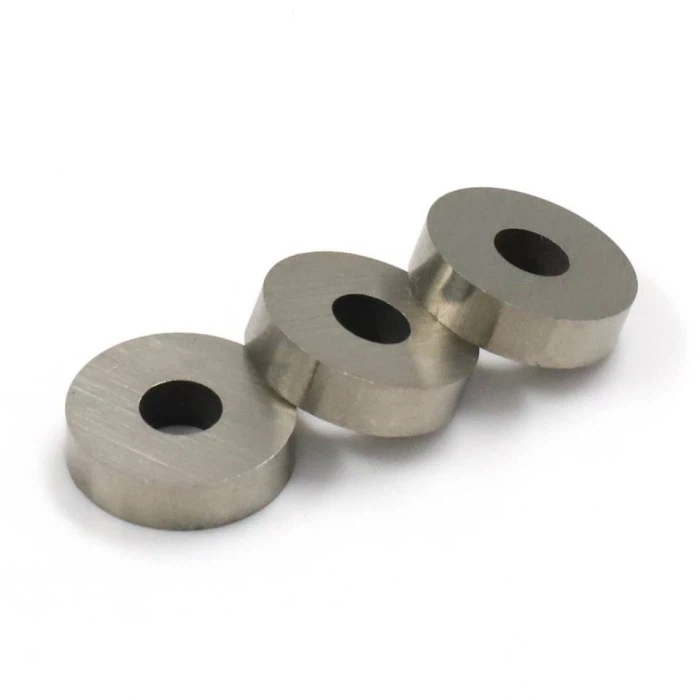
If you're interested in other types of Alnico magnets, we also offer Alnico Ring Magnet and Alnico Disc Magnet. These magnets have different shapes and properties, which make them suitable for different applications.
In conclusion, the magnetization process of an Alnico bar magnet is a complex but fascinating one. It involves a combination of melting, casting, heat treatment, and exposure to a strong magnetic field to create a powerful and reliable magnet. Whether you're in the automotive, audio, aerospace, or any other industry that requires high - quality magnets, our Alnico Bar Magnet is a great choice.
If you're interested in purchasing Alnico bar magnets or have any questions about the magnetization process or our products, don't hesitate to reach out. We're here to help you find the right magnet for your specific needs.

References
- "Magnetism and Magnetic Materials" by David Jiles
- "Handbook of Magnetic Materials" edited by Klaus H. J. Buschow


