


Hey there! As a supplier of Alnico Bar Magnets, I've been getting a lot of questions lately about how these magnets interact with non - magnetic materials. So, I thought I'd write this blog to clear things up.
First off, let's talk a bit about Alnico bar magnets. Alnico is an alloy made up of aluminum (Al), nickel (Ni), and cobalt (Co), along with some other elements like iron. These magnets are known for their high magnetic strength and excellent temperature stability. You can check out our Alnico Bar Magnet on our website to learn more about their features and specifications.
Now, what exactly are non - magnetic materials? Non - magnetic materials are substances that are not attracted to a magnet. Some common examples include wood, plastic, glass, and most types of metals like copper, aluminum, and brass. These materials have a very low magnetic susceptibility, which means they don't respond much to an external magnetic field.
So, how does the magnetic field of an Alnico bar magnet interact with non - magnetic materials? Well, the short answer is that there's usually no direct magnetic attraction. Unlike ferromagnetic materials (like iron, nickel, and cobalt) that can be strongly attracted to a magnet, non - magnetic materials don't have the internal structure that allows them to align with the magnetic field lines of the Alnico bar magnet.
However, that doesn't mean there are no interactions at all. One of the key ways the magnetic field can interact with non - magnetic materials is through a phenomenon called electromagnetic induction. When a non - magnetic conductor (like copper or aluminum) moves through the magnetic field of an Alnico bar magnet, or when the magnetic field changes around the conductor, an electric current is induced in the conductor. This is known as Faraday's law of electromagnetic induction.
Let's say you have a copper wire near an Alnico bar magnet. If you move the wire through the magnetic field, the electrons in the copper wire start to move, creating an electric current. This principle is used in many applications, such as generators and transformers. In a generator, a coil of wire is rotated in a magnetic field (which could be created by an Alnico bar magnet), and the induced current is then used to generate electricity.
Another interaction occurs on a more microscopic level. Even though non - magnetic materials don't have a net magnetic moment, the individual atoms and molecules within them can still be affected by the magnetic field. The magnetic field can cause a slight rearrangement of the electron clouds around the atoms. This is known as diamagnetism.
Diamagnetic materials, like water and most organic compounds, create a weak magnetic field in the opposite direction of the applied magnetic field. However, this effect is extremely weak compared to ferromagnetism. For example, if you place a small piece of graphite (a diamagnetic material) near an Alnico bar magnet, you won't see any obvious movement because the diamagnetic force is so small.
In some cases, the magnetic field of an Alnico bar magnet can also affect the behavior of non - magnetic fluids. For instance, in a process called magnetohydrodynamics (MHD), a conducting fluid (like liquid sodium) is influenced by a magnetic field. When an Alnico bar magnet is placed near a flowing conducting fluid, the magnetic field can exert a force on the fluid, which can be used to control the flow of the fluid or generate electricity.
Now, let's talk about some real - world applications where the interaction between Alnico bar magnets and non - magnetic materials is important. In the field of sensors, Alnico bar magnets are used in combination with non - magnetic materials to detect changes in position or movement. For example, a Hall - effect sensor, which is made of a non - magnetic semiconductor material, can detect the presence and strength of a magnetic field created by an Alnico bar magnet. This type of sensor is commonly used in automotive applications to measure the speed of a rotating shaft or the position of a moving part.
In addition to these applications, Alnico bar magnets are also used in speakers. The magnetic field of the Alnico bar magnet interacts with the current - carrying coil (made of a non - magnetic conductor like copper) in the speaker. When an electrical signal is passed through the coil, the interaction between the magnetic field of the Alnico bar magnet and the magnetic field created by the current in the coil causes the coil to move. This movement is then transferred to the speaker cone, which produces sound waves.

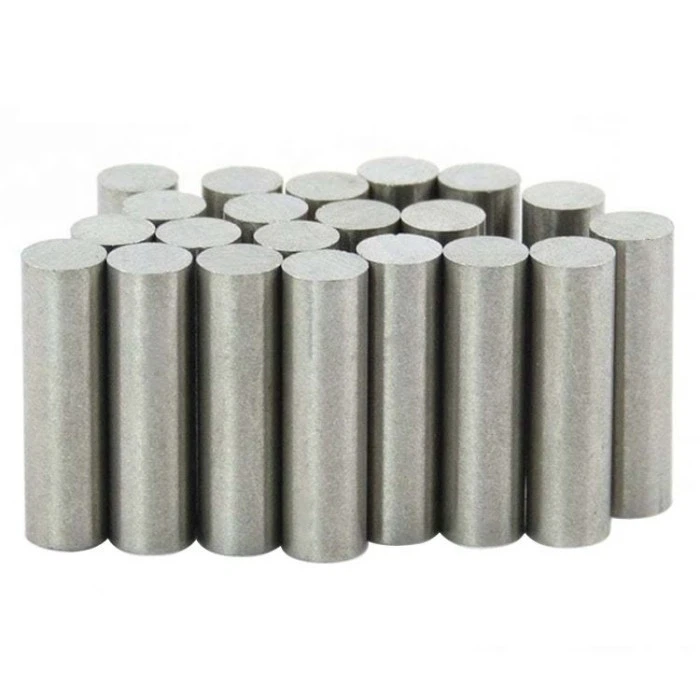
If you're in the market for high - quality Alnico bar magnets, we also offer other types of Alnico magnets on our website. Check out our Alnico Rod Magnet and Alnico Ring Magnet for more options.
Whether you're working on a scientific experiment, an industrial application, or a DIY project, our Alnico bar magnets can provide the magnetic field you need. We take pride in offering magnets with consistent quality and performance. If you have any questions about how our Alnico bar magnets interact with non - magnetic materials or if you're interested in purchasing our products, feel free to reach out. We're here to help you find the right magnet for your specific needs.
In conclusion, while the interaction between the magnetic field of an Alnico bar magnet and non - magnetic materials may not involve direct magnetic attraction, there are still several important ways in which they can interact. From electromagnetic induction to diamagnetism and magnetohydrodynamics, these interactions have a wide range of applications in various industries. So, if you're looking for a reliable source of Alnico bar magnets, don't hesitate to contact us for more information.
References
- Griffiths, D. J. (1999). Introduction to Electrodynamics (3rd ed.). Prentice Hall.
- Purcell, E. M., & Morin, D. J. (2013). Electricity and Magnetism (3rd ed.). Cambridge University Press.


