


Hey there! I'm a supplier of AlNiCo magnets, and today I'm gonna walk you through how these awesome magnets are made. AlNiCo magnets are pretty special – they've got high magnetic strength, great temperature stability, and they've been around for ages. Let's dive into the whole process!
Starting with the Raw Materials
The first step in making AlNiCo magnets is gathering the right raw materials. AlNiCo magnets are mainly made up of aluminum (Al), nickel (Ni), and cobalt (Co), hence the name AlNiCo. But that's not all. They also contain other elements like iron (Fe), copper (Cu), and sometimes titanium (Ti) or niobium (Nb). Each element plays a crucial role in determining the magnet's properties.
The quality of these raw materials is super important. We source high - purity metals to make sure our magnets have the best performance. For example, the cobalt we use helps increase the magnet's coercivity, which is a measure of how hard it is to demagnetize the magnet.
Melting the Metals
Once we've got all the raw materials, it's time to melt them down. We put the metals into a furnace, which can reach extremely high temperatures. The furnace needs to be carefully controlled to ensure that all the metals melt evenly and form a homogeneous alloy.

This melting process usually takes a few hours. During this time, we constantly monitor the temperature and the composition of the molten alloy. We use special sensors and analysis techniques to make sure everything is just right. Once the metals are fully melted and mixed, we're left with a liquid alloy that's ready for the next step.
Casting or Sintering
There are two main methods for forming AlNiCo magnets: casting and sintering.
Casting
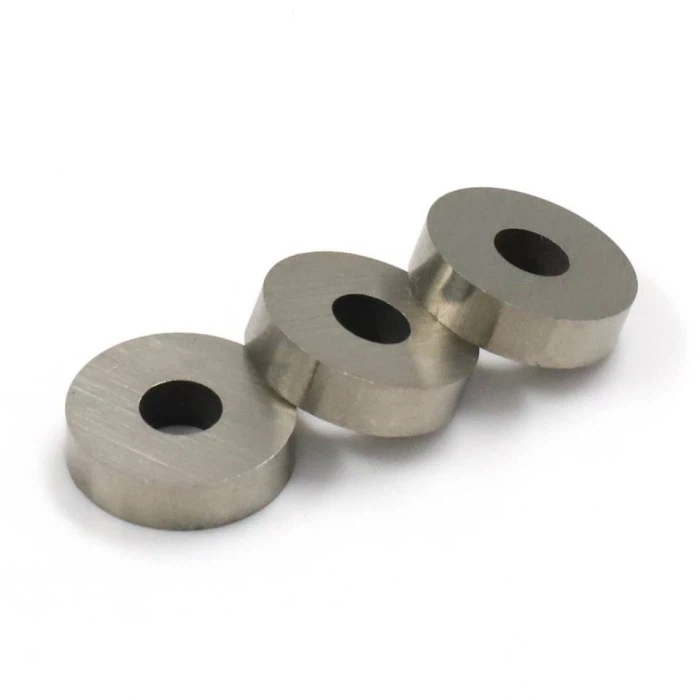
Casting is a traditional method for making AlNiCo magnets. In this process, we pour the molten alloy into a mold. The mold is designed to give the magnet its desired shape, whether it's a Alnico Disc Magnet, Alnico Ring Magnet, or Alnico Bar Magnet.
After pouring the alloy into the mold, we let it cool and solidify. This cooling process needs to be controlled carefully because it affects the magnet's microstructure and properties. Once the magnet has solidified, we remove it from the mold. Cast AlNiCo magnets usually have a smooth surface finish and can be made in complex shapes.
Sintering
Sintering is another way to make AlNiCo magnets. Instead of starting with a molten alloy, we start with a fine powder of the AlNiCo alloy. We press this powder into a mold under high pressure to form a green compact, which is a pre - shaped object that has the basic shape of the final magnet.
Then, we heat the green compact in a furnace at a high temperature, but not high enough to melt it completely. This process, called sintering, causes the powder particles to bond together, forming a solid magnet. Sintered AlNiCo magnets often have higher density and better mechanical properties compared to cast magnets.
Heat Treatment
After the magnet has been formed, it goes through a heat treatment process. Heat treatment is crucial for achieving the desired magnetic properties. There are several stages in the heat treatment process.
First, we heat the magnet to a high temperature and hold it there for a certain period. This is called the solution treatment. It helps to dissolve any secondary phases in the alloy and create a uniform structure.

Next, we cool the magnet at a controlled rate. This cooling process is very important because it determines the size and orientation of the magnetic domains in the magnet. Different cooling rates can result in different magnetic properties.
Finally, we may perform an aging treatment. During aging, we heat the magnet to a lower temperature and hold it there for a few hours. This helps to further enhance the magnet's magnetic properties by promoting the formation of fine - scale precipitates in the alloy.
Machining and Finishing
Once the heat treatment is done, the magnet may need some machining and finishing. Machining is used to achieve the exact dimensions and tolerances required by the customer. We use various machining techniques such as grinding, drilling, and cutting to shape the magnet.
After machining, we give the magnet a finishing treatment. This can include processes like polishing to improve the surface finish or coating to protect the magnet from corrosion. A good surface finish not only makes the magnet look better but also helps to prevent any damage during handling and use.
Magnetization
The last step in making AlNiCo magnets is magnetization. Before magnetization, the magnet doesn't have a strong magnetic field. We use a powerful magnetic field to align the magnetic domains in the magnet, giving it its magnetic properties.
We place the magnet in a magnetization fixture and apply a strong magnetic field. The strength and direction of the magnetic field are carefully controlled to ensure that the magnet has the desired magnetic orientation and strength. Once the magnetization is complete, the AlNiCo magnet is ready to be used in various applications.
Applications of AlNiCo Magnets
AlNiCo magnets are used in a wide range of applications. They're commonly used in electric motors, generators, sensors, and audio equipment. Their high temperature stability makes them ideal for use in environments where the temperature can vary widely.
In electric motors, AlNiCo magnets help to convert electrical energy into mechanical energy. In audio equipment, they're used in speakers to produce sound. And in sensors, they can detect changes in magnetic fields and convert them into electrical signals.

Why Choose Our AlNiCo Magnets?
As a supplier of AlNiCo magnets, we take pride in our products. We use the latest manufacturing techniques and strict quality control measures to ensure that our magnets meet the highest standards. Whether you need Alnico Disc Magnet, Alnico Ring Magnet, or Alnico Bar Magnet, we can provide you with the right solution.
Our magnets are not only of high quality but also come at competitive prices. We understand the needs of our customers and are committed to providing excellent customer service. If you're looking for reliable AlNiCo magnets for your project, don't hesitate to get in touch with us. We're here to discuss your requirements and help you find the best magnets for your application.
Conclusion
Making AlNiCo magnets is a complex process that involves several steps, from gathering raw materials to magnetization. Each step is crucial for achieving the desired magnetic properties and quality. As a supplier, we're dedicated to producing top - notch AlNiCo magnets that meet the diverse needs of our customers.
If you're interested in our AlNiCo magnets or have any questions about the manufacturing process, feel free to reach out. We'd love to have a chat with you and see how we can work together.
References
- "Permanent Magnet Materials and Their Applications" by E. C. Stoner and E. P. Wohlfarth.
- "Magnetism and Magnetic Materials" by D. J. Craik.


