


Hey there! As a supplier of Neodymium Disc Magnets, I often get asked about the magnetization direction of these powerful little magnets. So, let's dive right in and explore this topic together.
First off, what exactly are neodymium disc magnets? Well, they're super-strong permanent magnets made from an alloy of neodymium, iron, and boron. These magnets are known for their incredible magnetic strength, even in small sizes, which makes them popular in a wide range of applications, from electronics to industrial machinery.
Now, onto the main question: what is the magnetization direction of neodymium disc magnets? The magnetization direction refers to the way the magnetic field is oriented within the magnet. In the case of neodymium disc magnets, there are typically two common magnetization directions: axial and radial.
Axial magnetization is when the magnetic field runs parallel to the axis of the disc. In other words, if you imagine the disc as a coin, the north and south poles are located on the flat faces of the disc. This is the most common magnetization direction for neodymium disc magnets, and it's often used when you need a strong magnetic field on the top and bottom surfaces of the magnet.
On the other hand, radial magnetization is when the magnetic field runs perpendicular to the axis of the disc. So, instead of having the north and south poles on the flat faces, they're located on the curved edge of the disc. Radial magnetization is less common but can be useful in certain applications where you need a magnetic field that wraps around the circumference of the magnet.
So, how do you know which magnetization direction is right for your application? Well, it really depends on what you're using the magnet for. If you're looking to attract or repel other magnets or magnetic materials on the top or bottom surfaces of the disc, axial magnetization is probably the way to go. But if you need a magnetic field that encircles the disc, radial magnetization might be a better choice.
Here are some examples of applications for each magnetization direction:
Axial Magnetization
- Speakers: In speakers, neodymium disc magnets with axial magnetization are used to create the magnetic field that interacts with the voice coil, causing it to vibrate and produce sound.
- Sensors: Many sensors rely on the magnetic field of neodymium disc magnets to detect the presence or movement of objects. Axial magnetization provides a strong, focused magnetic field that can be easily detected by the sensor.
- Magnetic separators: In industrial settings, magnetic separators are used to remove ferrous materials from non-ferrous materials. Neodymium disc magnets with axial magnetization are often used in these separators to create a strong magnetic field that attracts and holds the ferrous particles.
Radial Magnetization
- Motors: In some types of motors, radial magnetization is used to create a rotating magnetic field that drives the motor. This can be more efficient in certain applications, especially those where space is limited.
- Magnetic couplings: Magnetic couplings are used to transfer torque between two shafts without the need for a physical connection. Radial magnetization can provide a more uniform magnetic field around the circumference of the magnet, which can improve the performance of the coupling.
- Magnetic bearings: Magnetic bearings use magnetic fields to support and guide rotating shafts without the need for physical contact. Radial magnetization can help create a stable magnetic field that keeps the shaft centered and reduces friction.
As a supplier of Neodymium Disc Magnets, we offer both axial and radial magnetization options to meet the needs of our customers. We also have a wide range of other neodymium magnets available, including Neodymium Block Magnet, Sintered Neodymium Iron Boron Permanent Magnet, and Neodymium Countersunk Ring Magnet.
When it comes to choosing the right magnetization direction for your application, it's important to consider the specific requirements of your project. If you're not sure which option is best, our team of experts is here to help. We can provide you with technical advice and guidance to ensure that you get the right magnet for your needs.
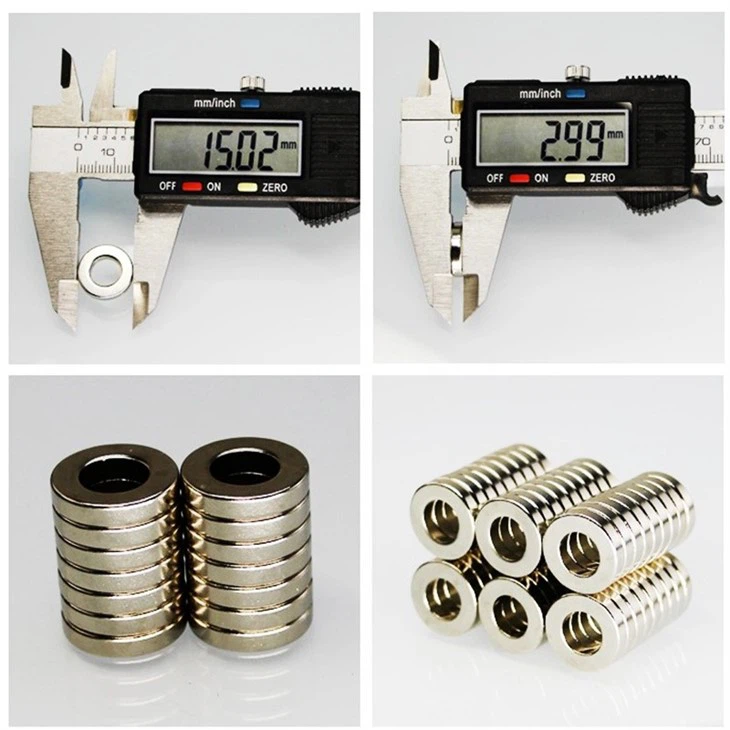
In addition to offering a wide range of magnet options, we also provide custom magnet manufacturing services. If you have a specific design or magnetization requirement that isn't available in our standard product line, we can work with you to create a custom solution. Our state-of-the-art manufacturing facilities and experienced team of engineers allow us to produce high-quality magnets with precise specifications.
So, if you're in the market for neodymium disc magnets or any other type of neodymium magnet, don't hesitate to get in touch. We're here to provide you with the best products and services at competitive prices. Whether you're a small business or a large corporation, we have the expertise and resources to meet your needs.

In conclusion, the magnetization direction of neodymium disc magnets plays a crucial role in their performance and suitability for different applications. By understanding the differences between axial and radial magnetization, you can make an informed decision when choosing the right magnet for your project. And if you need any help or have any questions, our team is just a click or a call away.
Thanks for reading! If you have any comments or questions, feel free to leave them below.
References
- O'Handley, R. C. (2000). Modern magnetic materials: principles and applications. John Wiley & Sons.
- Jiles, D. C. (1998). Introduction to magnetism and magnetic materials. CRC press.
- McCaig, M., & Clegg, A. G. (1987). Permanent magnet motors. Oxford University Press.


