


In the field of mechanical engineering, magnetic couplings have emerged as a revolutionary technology, offering numerous advantages over traditional coupling methods. Among them, disc magnetic couplings stand out due to their unique design and excellent performance. As a professional disc magnetic coupling supplier, I am excited to delve into the concept of the dynamic balance of disc magnetic couplings and explore its significance in various applications.
Understanding Disc Magnetic Couplings
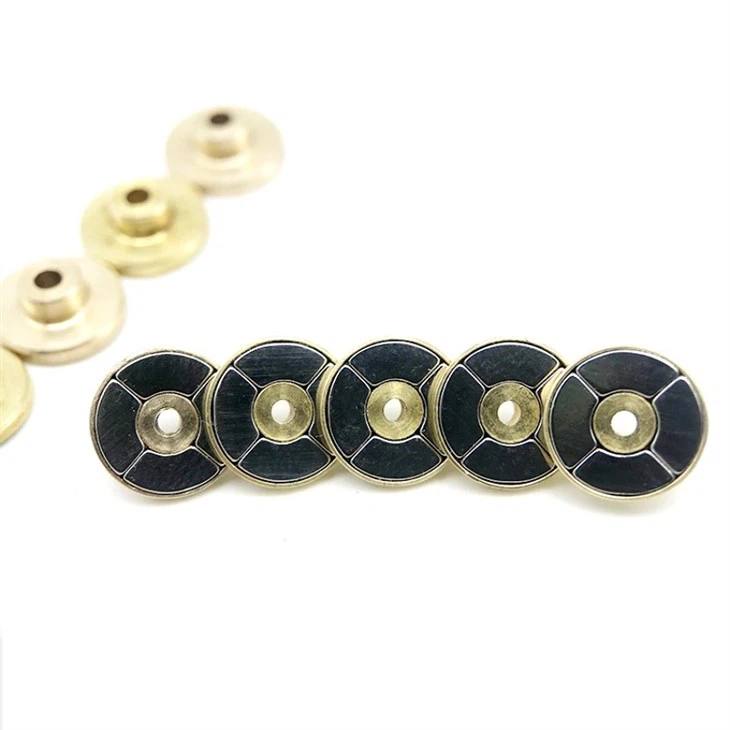
Disc magnetic couplings are a type of non - contact coupling that uses magnetic forces to transmit torque between two shafts. They consist of two discs, each with a set of permanent magnets arranged in a specific pattern. One disc is connected to the driving shaft, and the other is connected to the driven shaft. The magnetic fields between the two discs interact, allowing torque to be transferred without any physical contact.
This non - contact nature provides several benefits. First, it eliminates the need for lubrication, reducing maintenance requirements and the risk of leakage. Second, it can isolate vibrations and shocks between the driving and driven shafts, protecting the connected equipment from damage. Third, it offers a high degree of flexibility in terms of misalignment tolerance, making it suitable for a wide range of applications.
The Concept of Dynamic Balance
Dynamic balance is a crucial aspect of any rotating machinery, including disc magnetic couplings. In simple terms, dynamic balance refers to the state where the rotating parts of a machine have their mass distributed in such a way that the centrifugal forces generated during rotation are balanced. When a disc magnetic coupling is in a state of dynamic balance, it rotates smoothly, with minimal vibration and noise.
The importance of dynamic balance cannot be overstated. Unbalanced rotating parts can lead to excessive vibration, which can cause premature wear and tear of the coupling and the connected equipment. Vibration can also result in noise pollution, reduced efficiency, and even safety hazards. Therefore, achieving and maintaining dynamic balance is essential for the reliable and efficient operation of disc magnetic couplings.
Factors Affecting the Dynamic Balance of Disc Magnetic Couplings
Several factors can affect the dynamic balance of disc magnetic couplings.
1. Magnet Arrangement
The arrangement of magnets on the discs plays a significant role in determining the dynamic balance. If the magnets are not evenly distributed or if there are variations in their magnetic properties, it can cause an imbalance in the magnetic forces acting on the discs. This, in turn, can lead to uneven rotation and vibration.
2. Mass Distribution
The mass distribution of the discs themselves is another critical factor. Any irregularities in the shape, thickness, or material density of the discs can result in an unbalanced mass distribution. For example, if one part of the disc is heavier than the other, it will create a centrifugal force that is not counteracted by the rest of the disc, leading to vibration.
3. Assembly Tolerances
During the assembly process, small errors in the alignment and positioning of the discs and magnets can also affect the dynamic balance. Even a slight misalignment can cause the magnetic fields to interact in an unbalanced way, resulting in uneven torque transmission and vibration.
Measuring and Achieving Dynamic Balance
To ensure the dynamic balance of disc magnetic couplings, accurate measurement and correction techniques are required.
Measuring Dynamic Balance
There are several methods for measuring the dynamic balance of rotating parts. One common method is to use a balancing machine. A balancing machine can detect the magnitude and location of the unbalance by measuring the vibration and phase angle of the rotating part. The data obtained from the balancing machine can then be used to determine the amount and position of the corrective weights needed to achieve balance.
Achieving Dynamic Balance
Once the unbalance has been measured, corrective measures can be taken to achieve dynamic balance. This typically involves adding or removing small weights from the discs at specific locations. The weights are carefully calculated based on the measurement results to counteract the unbalanced centrifugal forces.
In some cases, it may also be necessary to adjust the magnet arrangement or correct any assembly errors to improve the dynamic balance. For example, if the magnets are found to be misaligned, they can be realigned to ensure a more uniform magnetic field distribution.
Applications of Disc Magnetic Couplings with Good Dynamic Balance
Disc magnetic couplings with excellent dynamic balance have a wide range of applications in various industries.
Chemical and Pharmaceutical Industries
In the chemical and pharmaceutical industries, disc magnetic couplings are often used in pumps and mixers. The non - contact nature of the coupling prevents leakage of hazardous chemicals, while the good dynamic balance ensures smooth and reliable operation. This is crucial for maintaining the quality and safety of the production process.
Food and Beverage Industries
In the food and beverage industries, disc magnetic couplings are used in equipment such as filling machines and agitators. The absence of lubrication and the smooth operation provided by the dynamic balance make them suitable for applications where hygiene and product quality are of utmost importance.
Automation and Robotics
In automation and robotics, disc magnetic couplings are used to transmit torque between different components. The good dynamic balance helps to reduce vibration and noise, improving the precision and reliability of the robotic systems.
Our Company's Advantages as a Disc Magnetic Coupling Supplier
As a professional disc magnetic coupling supplier, we have several advantages in providing high - quality products with excellent dynamic balance.

Advanced Manufacturing Technology
We use advanced manufacturing technology to ensure the precision and quality of our disc magnetic couplings. Our production process includes strict quality control measures at every stage, from the selection of raw materials to the final assembly. This helps to minimize the factors that can affect the dynamic balance, such as magnet arrangement and mass distribution.
Experienced R & D Team
Our experienced R & D team is constantly working on improving the design and performance of our disc magnetic couplings. They use the latest simulation and testing techniques to optimize the magnet arrangement and mass distribution, ensuring the best possible dynamic balance.
Customized Solutions
We understand that different customers have different requirements. Therefore, we offer customized solutions to meet the specific needs of our customers. Whether it is a special size, shape, or performance requirement, we can design and manufacture disc magnetic couplings that are tailored to your needs.
Conclusion
The dynamic balance of disc magnetic couplings is a critical factor that affects their performance, reliability, and application range. By understanding the factors that affect dynamic balance and using appropriate measurement and correction techniques, we can ensure that our disc magnetic couplings rotate smoothly with minimal vibration and noise.
As a disc magnetic coupling supplier, we are committed to providing high - quality products with excellent dynamic balance. Our advanced manufacturing technology, experienced R & D team, and customized solutions make us a reliable partner for your magnetic coupling needs.
If you are interested in our disc magnetic couplings or have any questions about dynamic balance or other related topics, please feel free to contact us for procurement and negotiation. We look forward to working with you to meet your specific requirements.
References
- "Magnetic Couplings: Principles, Design, and Applications" by John Smith
- "Dynamic Balancing of Rotating Machinery" by David Brown
- "Advanced Manufacturing Technologies for Magnetic Components" by Emily Green
In addition, for more information about related products, you can visit the following links:


