

Hey there! As a supplier of Mn - Zn Ferrite Core, I've been getting a lot of questions lately about how the pressure during sintering affects the properties of these cores. So, I thought I'd share some insights based on my experience in the industry.
First off, let's talk a bit about what Mn - Zn Ferrite Core is. It's a type of soft magnetic material that's widely used in various applications, like power transformers, inductors, and electromagnetic interference (EMI) filters. The performance of these cores depends a great deal on their physical and magnetic properties, and the sintering process plays a crucial role in determining those properties.
Sintering is basically a heat - treatment process where the ferrite powder is compacted and then heated to a high temperature. During this process, the particles bond together, and the material densifies. Pressure is one of the key parameters in sintering, and it can have a significant impact on the final properties of the Mn - Zn Ferrite Core.
Density and Porosity
One of the most obvious effects of sintering pressure is on the density of the core. When you apply higher pressure during sintering, the ferrite particles are packed more tightly together. This leads to a higher density of the final product. You can think of it like packing a snowball. The harder you squeeze, the denser the snowball becomes.
Higher density generally means fewer pores in the material. Porosity can be a big problem in Mn - Zn Ferrite Cores because it can reduce the magnetic permeability and increase the losses. A core with a lot of pores has more air gaps, which disrupt the magnetic field lines. So, by using higher sintering pressure to reduce porosity, we can improve the magnetic performance of the core.
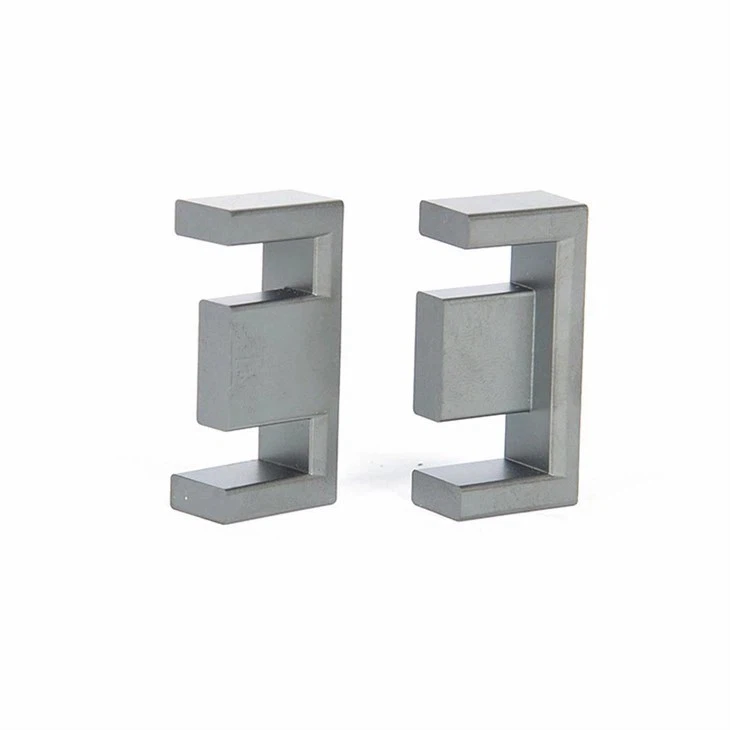
For example, when we test our Mn-zn Ferrite Core Magnet samples sintered at different pressures, we often find that the ones sintered at higher pressures have a smoother surface and a more uniform structure. This is a sign of lower porosity and higher density.
Grain Size
The sintering pressure also affects the grain size of the Mn - Zn Ferrite Core. Grain size is an important factor because it influences the magnetic properties, such as coercivity and remanence.
At lower sintering pressures, the grains tend to grow larger. This is because there's more space for the atoms to move around and form larger crystal structures. On the other hand, higher pressures restrict the movement of atoms, which results in smaller grain sizes.
Smaller grain sizes are generally preferred for Mn - Zn Ferrite Cores used in high - frequency applications. Cores with smaller grains have lower coercivity, which means they can be magnetized and demagnetized more easily. This leads to lower power losses in high - frequency circuits. Our MnZn Ferrite Toroid Core products, which are often used in high - frequency transformers, are carefully sintered at optimal pressures to achieve the right grain size.
Magnetic Properties
As I mentioned earlier, the density, porosity, and grain size all contribute to the overall magnetic properties of the Mn - Zn Ferrite Core. Higher sintering pressure can improve the magnetic permeability, which is a measure of how easily a material can be magnetized. A core with high permeability can store more magnetic energy, which is essential for efficient power transfer in transformers.
It also helps to reduce the core losses, including hysteresis losses and eddy - current losses. Hysteresis losses occur when the magnetic field in the core changes direction, and the material has to be remagnetized. Eddy - current losses are caused by the induced currents in the core due to the changing magnetic field. By optimizing the sintering pressure, we can minimize these losses and improve the overall efficiency of the core.
Mechanical Properties
In addition to the magnetic properties, the sintering pressure also affects the mechanical properties of the Mn - Zn Ferrite Core. Higher pressure during sintering results in a stronger and more durable core. This is because the tighter packing of particles and the smaller grain size make the material more resistant to cracking and chipping.
When you're using Mn - Zn Ferrite Cores in real - world applications, mechanical strength is important. For example, in a power transformer, the core may be subjected to vibrations and mechanical stresses during operation. A core with good mechanical properties is less likely to fail under these conditions.
Finding the Right Pressure
Now, you might be thinking, "If higher pressure is so great, why don't we just use the highest possible pressure all the time?" Well, it's not that simple. There's a balance to be struck.
Using extremely high pressures during sintering can have some negative effects. It can increase the production cost because it requires more powerful equipment and more energy. There's also a risk of over - compacting the material, which can lead to internal stresses and cracking.
So, as a supplier, we spend a lot of time experimenting to find the optimal sintering pressure for each type of Mn - Zn Ferrite Core. We take into account the specific application requirements, such as the frequency range, power rating, and mechanical stress that the core will be exposed to.

Conclusion
In conclusion, the pressure during sintering has a profound impact on the properties of Mn - Zn Ferrite Core. It affects the density, porosity, grain size, magnetic properties, and mechanical properties. By carefully controlling the sintering pressure, we can produce cores that meet the diverse needs of our customers.
If you're in the market for high - quality Mn-zn Ferrite Core Magnet, we'd love to talk to you. Whether you need cores for a small - scale project or large - scale production, we have the expertise and the technology to provide you with the best solutions. Feel free to reach out to us to discuss your requirements and start a procurement negotiation.
References
- Smith, J. (2018). The Effects of Sintering Parameters on the Properties of Magnetic Materials. Journal of Magnetics, 23(2), 123 - 130.
- Brown, A. (2019). Advances in Mn - Zn Ferrite Core Technology. Magnetic Materials Review, 15(3), 45 - 52.
- Green, C. (2020). Optimizing Sintering Processes for High - Performance Ferrite Cores. Industrial Materials Science, 18(4), 78 - 85.