


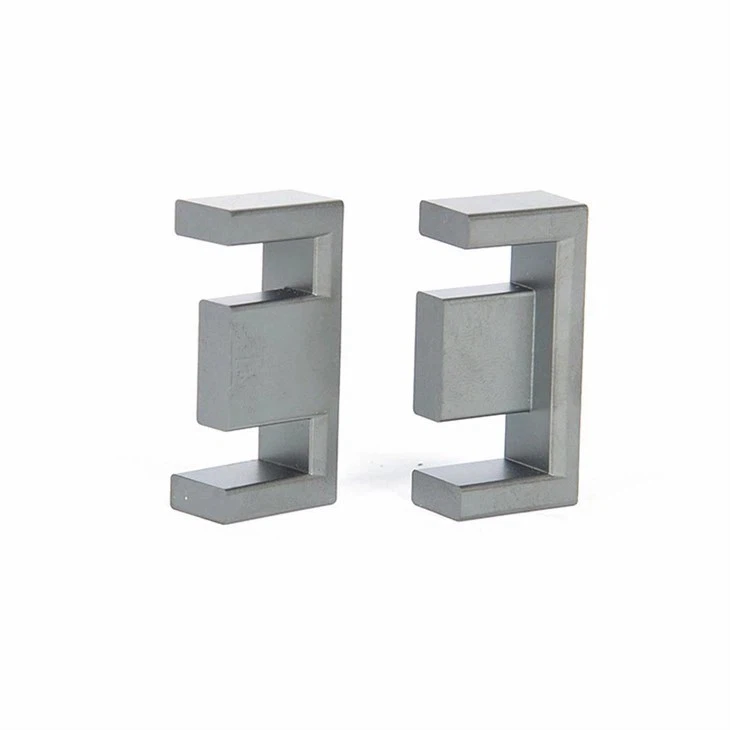
MnZn ferrite cores are widely recognized in the electronics industry for their excellent magnetic properties, which make them suitable for a variety of applications. However, a common question that arises is whether MnZn ferrite cores can be used in DC applications. As a supplier of MnZn Ferrite Core, I will delve into this topic, exploring the characteristics of MnZn ferrite cores, the requirements of DC applications, and the feasibility of using these cores in such scenarios.
Characteristics of MnZn Ferrite Cores
MnZn ferrite cores are made from a combination of manganese (Mn), zinc (Zn), and iron (Fe) oxides. These cores possess several key characteristics that make them attractive for many applications:
- High Permeability: MnZn ferrite cores have relatively high initial permeability, which means they can easily be magnetized and demagnetized. This property is beneficial for applications such as transformers and inductors, where efficient magnetic coupling is required.
- Low Core Losses: At high frequencies, MnZn ferrite cores exhibit low core losses, making them suitable for high - frequency applications. The low losses help to improve the efficiency of the magnetic components, reducing heat generation and power consumption.
- Good Saturation Characteristics: While the saturation flux density of MnZn ferrite cores is not as high as some other magnetic materials, it is still sufficient for many applications. The saturation characteristics determine the maximum magnetic field that the core can handle before it starts to lose its magnetic properties.
Requirements of DC Applications
DC applications typically involve the flow of direct current, which creates a constant magnetic field. The requirements for magnetic cores in DC applications are different from those in AC applications:
- High Saturation Flux Density: In DC applications, the magnetic core needs to be able to withstand a relatively high DC bias without saturating. Saturation of the core can lead to a significant increase in inductance loss and a decrease in the performance of the magnetic component.
- Low Core Losses under DC Bias: Even in DC applications, there may be some ripple or transient currents, which can cause core losses. Therefore, the core should have low losses under DC bias conditions to ensure efficient operation.
- Stability: The magnetic properties of the core should be stable over time and under different operating conditions, such as temperature and humidity.
Feasibility of Using MnZn Ferrite Cores in DC Applications
The suitability of MnZn ferrite cores for DC applications depends on several factors:
- DC Bias Level: MnZn ferrite cores can be used in DC applications with relatively low DC bias levels. When the DC bias is low, the core can operate within its linear region, and its high permeability and low losses can be utilized effectively. However, as the DC bias increases, the core is more likely to saturate, which can degrade the performance of the magnetic component.
- Frequency and Ripple: In some DC applications, there may be a certain amount of ripple or high - frequency components in the current. MnZn ferrite cores can handle these high - frequency components well due to their low core losses at high frequencies. However, the DC bias still needs to be considered to avoid saturation.
- Design Considerations: Proper design of the magnetic component is crucial when using MnZn ferrite cores in DC applications. For example, the core size, shape, and winding configuration can all affect the performance of the component under DC bias. By carefully selecting the core and optimizing the design, it is possible to use MnZn ferrite cores in a wider range of DC applications.
Applications of MnZn Ferrite Cores in DC Circuits
Despite the challenges, there are several DC applications where MnZn ferrite cores can be used effectively:
- DC - DC Converters: In some low - power DC - DC converters, MnZn ferrite cores can be used in the inductors. These converters often have relatively low DC bias levels, and the high permeability and low losses of MnZn ferrite cores can help to improve the efficiency of the converter.
- Power Supplies: MnZn ferrite cores can be used in the transformers and inductors of power supplies. In switch - mode power supplies, for example, the high - frequency operation and relatively low DC bias make MnZn ferrite cores a suitable choice.
- Filter Inductors: Filter inductors in DC circuits are used to remove ripple and noise. MnZn ferrite cores can be used in these inductors, especially when the DC bias is not too high and there are high - frequency components in the signal.
Comparison with Other Magnetic Materials
When considering DC applications, it is also important to compare MnZn ferrite cores with other magnetic materials:
- Powder Cores: Powder cores, such as iron powder cores and sendust cores, generally have higher saturation flux densities than MnZn ferrite cores. They are better suited for applications with high DC bias levels. However, powder cores may have higher core losses at high frequencies compared to MnZn ferrite cores.
- Silicon Steel Cores: Silicon steel cores have very high saturation flux densities and are commonly used in power transformers. They are more suitable for applications with high DC bias and low - frequency operation. However, silicon steel cores are not as efficient at high frequencies as MnZn ferrite cores.
Using Mn - zn Ferrite Core Magnet in DC Applications
As a supplier of Mn - zn Ferrite Core Magnet, we understand the specific requirements of DC applications. Our MnZn ferrite cores are carefully engineered to provide the best performance in various scenarios.
We offer a wide range of MnZn ferrite cores, including MnZn Ferrite Toroid Core, which can be customized according to the specific needs of the application. Our technical team can provide professional advice on core selection and design optimization to ensure that our customers can use our MnZn ferrite cores effectively in their DC applications.
Conclusion
In conclusion, MnZn ferrite cores can be used in DC applications, but their use is limited by the DC bias level. For low - DC - bias applications, MnZn ferrite cores offer several advantages, such as high permeability, low core losses at high frequencies, and good saturation characteristics. However, for applications with high DC bias, other magnetic materials may be more suitable.
As a reliable supplier of MnZn ferrite cores, we are committed to providing high - quality products and professional technical support. If you are considering using MnZn ferrite cores in your DC applications, we encourage you to contact us for more information and to discuss your specific requirements. Our team of experts will be happy to assist you in finding the best solution for your project.

References
- "Handbook of Ferrite Materials" by S. G. Sankar.
- "Magnetic Materials and Their Applications" by E. C. Snelling.
- Technical datasheets of various MnZn ferrite core manufacturers.


