


Hey there! As a supplier of Alnico bar magnets, I often get asked if these magnets can be used in magnetic levitation systems. It's a super interesting question, and today, I'm gonna dive deep into it.
First off, let's quickly talk about what Alnico bar magnets are. Alnico is an alloy made up of aluminum (Al), nickel (Ni), and cobalt (Co), along with some other elements. These magnets are known for their high magnetic strength and excellent temperature stability. They've been around for a long time and are used in a wide range of applications, from guitar pickups to electric motors.
Now, onto magnetic levitation systems. Magnetic levitation, or maglev for short, is a technology that uses magnetic fields to suspend an object in the air, eliminating the need for physical contact. This has some really cool advantages, like reducing friction and allowing for high - speed movement. Maglev trains are a well - known example of this technology in action.
So, can Alnico bar magnets be used in these systems? Well, it's a bit of a mixed bag.
Advantages of Using Alnico Bar Magnets in Maglev Systems
One of the biggest advantages of Alnico bar magnets is their high coercivity and remanence. Coercivity is the ability of a magnet to resist demagnetization, and remanence is the magnetic field that remains in a magnet after the external magnetic field is removed. Alnico bar magnets have relatively high values for both of these properties, which means they can maintain a strong magnetic field over time.
In a magnetic levitation system, a strong and stable magnetic field is crucial. The magnets need to generate enough force to counteract the force of gravity and keep the object suspended. Alnico bar magnets can provide this kind of stable magnetic force, which is a big plus.
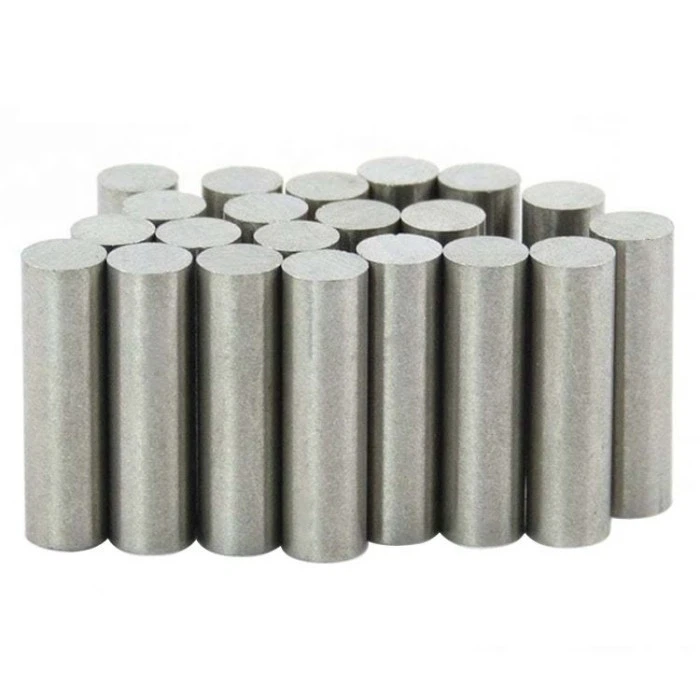

Another advantage is their temperature stability. Alnico magnets can operate at relatively high temperatures without significant loss of magnetic strength. In some maglev applications, the magnets might be exposed to high - temperature environments, either due to friction or electrical currents. Alnico bar magnets can handle these conditions better than some other types of magnets, like neodymium magnets, which can lose their magnetism at high temperatures.
Disadvantages of Using Alnico Bar Magnets in Maglev Systems
However, there are also some drawbacks to using Alnico bar magnets in magnetic levitation systems. One of the main issues is their relatively low energy product compared to other types of magnets, like neodymium magnets. The energy product is a measure of the maximum energy that a magnet can store in its magnetic field. A higher energy product means that a magnet can generate a stronger magnetic field for a given size.
In a maglev system, space is often limited. If you want to use Alnico bar magnets, you might need larger magnets to generate the same amount of levitation force as you would with a neodymium magnet of a smaller size. This can make the system bulkier and more expensive.
Another problem is that Alnico magnets are brittle. They can crack or break easily if they're subjected to mechanical stress. In a maglev system, the magnets might experience vibrations or impacts, which could damage the Alnico bar magnets. This could lead to a loss of magnetic strength and potentially cause the system to fail.
Alternatives and Complementary Solutions
If the drawbacks of Alnico bar magnets are too significant for a particular maglev application, there are alternatives. Neodymium magnets, for example, have a much higher energy product and are more compact. They can generate a strong magnetic field with a smaller size, which is great for space - constrained applications.
However, neodymium magnets have their own limitations, like poor temperature stability and being more prone to corrosion. So, in some cases, a combination of Alnico bar magnets and other types of magnets might be the best solution. For example, you could use Alnico bar magnets in areas where temperature stability is crucial and neodymium magnets in other parts of the system where a high magnetic field is needed in a small space.
Our Alnico Magnet Products
As a supplier of Alnico bar magnets, we also offer a range of other Alnico magnet products. You can check out our Alnico Ring Magnet, Alnico Rod Magnet, and Alnico Disc Magnet on our website. These magnets have different shapes and sizes, which can be useful for different types of magnetic levitation systems or other applications.
Conclusion
In conclusion, Alnico bar magnets can be used in magnetic levitation systems, but they have both advantages and disadvantages. Their high coercivity, remanence, and temperature stability make them suitable for some applications, but their low energy product and brittleness can be limiting factors. Whether or not to use Alnico bar magnets in a maglev system depends on the specific requirements of the application, such as the available space, the operating temperature, and the budget.
If you're interested in using Alnico bar magnets or any of our other Alnico magnet products for your magnetic levitation system or other projects, feel free to reach out to us. We're always happy to discuss your needs and help you find the best solution.
References
- "Magnetic Materials: Fundamentals and Applications" by E. C. Stoner and E. P. Wohlfarth
- "Introduction to Magnetic Materials" by B. D. Cullity and C. D. Graham


