


Integrating a Magnet Halbach Array into magnetic sensor designs can significantly enhance the performance and functionality of these sensors. As a Magnet Halbach Array supplier, I have witnessed firsthand the transformative impact these arrays can have on magnetic sensing applications. In this blog post, I will delve into the details of how to effectively integrate a Magnet Halbach Array into magnetic sensor designs, covering key considerations, benefits, and practical steps.
Understanding the Magnet Halbach Array
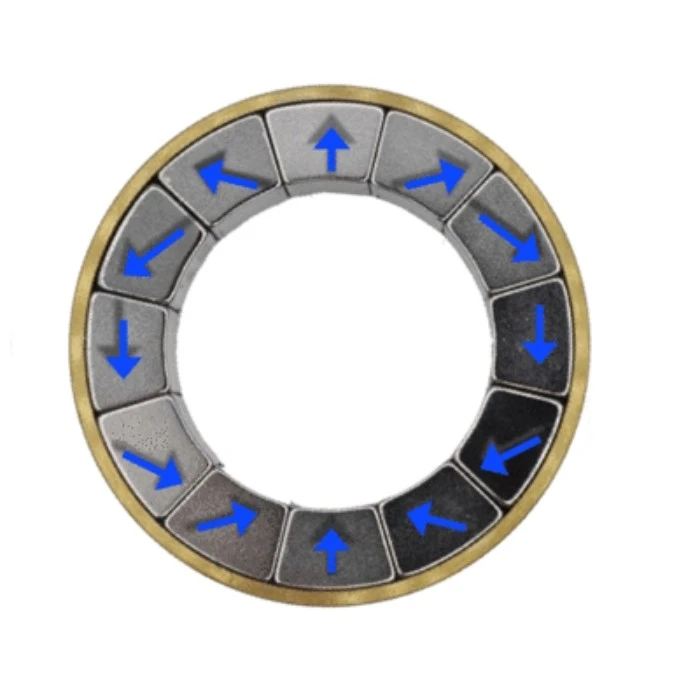
Before we discuss integration, it's essential to understand what a Magnet Halbach Array is. A Halbach Array is a special arrangement of permanent magnets that creates a strong, one - sided magnetic field. The unique magnetic field distribution of a Halbach Array is achieved by carefully orienting the magnetization vectors of individual magnets within the array. This results in a concentrated magnetic field on one side of the array while minimizing the field on the opposite side.
There are different types of Halbach Arrays, such as the Halbach Array Arrangement, which refers to the specific pattern in which the magnets are placed, and the Cylindrical Halbach Array, which has a cylindrical shape and is useful in applications like magnetic levitation and particle accelerators. The Halbach Array Assembly involves the process of putting the individual magnets together to form the array.
Benefits of Integrating a Magnet Halbach Array into Magnetic Sensors
Enhanced Sensitivity
The concentrated magnetic field of a Halbach Array can increase the sensitivity of magnetic sensors. Since the magnetic field is stronger on one side, the sensor can detect smaller changes in the magnetic field, leading to more accurate measurements. For example, in a magnetic field sensor used for detecting the position of a moving object, a Halbach Array can provide a more distinct magnetic signal, allowing for more precise position determination.
Reduced Interference
The one - sided nature of the Halbach Array's magnetic field helps to reduce interference from external magnetic sources. By minimizing the magnetic field on the non - sensing side, the sensor is less likely to be affected by stray magnetic fields in the environment. This is particularly important in applications where there are multiple magnetic components or in noisy electromagnetic environments.
Compact Design
Halbach Arrays can be designed to be more compact compared to traditional magnetic configurations. This is because they can generate a strong magnetic field with fewer magnets or a smaller volume of magnetic material. In sensor designs where space is limited, such as in wearable devices or miniaturized sensors, the compactness of a Halbach Array is a significant advantage.
Key Considerations for Integration
Magnetic Field Requirements
The first step in integrating a Halbach Array into a magnetic sensor design is to determine the magnetic field requirements of the sensor. This includes the strength, direction, and uniformity of the magnetic field. Different sensor types, such as Hall effect sensors, magnetoresistive sensors, and fluxgate sensors, have different sensitivities and operating ranges. For example, a Hall effect sensor may require a relatively weak but uniform magnetic field, while a fluxgate sensor may need a stronger and more precisely controlled field.
Array Design and Geometry
The design and geometry of the Halbach Array should be tailored to the specific sensor application. Factors such as the size, shape, and number of magnets in the array will affect the magnetic field distribution. For example, a linear Halbach Array may be suitable for a sensor that needs to detect linear motion, while a circular or cylindrical array may be better for detecting rotational motion. The orientation of the magnetization vectors of the individual magnets also needs to be carefully calculated to achieve the desired magnetic field characteristics.
Material Selection
The choice of magnetic materials for the Halbach Array is crucial. Permanent magnets such as neodymium - iron - boron (NdFeB), samarium - cobalt (SmCo), and ferrite magnets have different magnetic properties, including remanence, coercivity, and temperature stability. NdFeB magnets are known for their high magnetic strength, but they may have lower temperature stability compared to SmCo magnets. Ferrite magnets are more cost - effective but have lower magnetic properties. The material selection should be based on the operating conditions of the sensor, such as temperature, humidity, and mechanical stress.
Mechanical and Thermal Considerations
The mechanical and thermal properties of the Halbach Array and the sensor need to be considered during integration. The array should be securely mounted to prevent movement or vibration, which could affect the magnetic field stability. Additionally, the heat generated by the sensor or the surrounding environment may affect the magnetic properties of the array. Adequate thermal management, such as using heat sinks or thermal insulation, may be required to ensure the long - term performance of the integrated system.
Practical Steps for Integration
Design and Simulation
Use magnetic field simulation software to design and optimize the Halbach Array for the specific sensor application. Software tools such as COMSOL Multiphysics or ANSYS Maxwell can model the magnetic field distribution of the array and predict its performance. This allows you to test different array designs, magnet orientations, and material combinations before fabricating the actual array.

Fabrication of the Halbach Array
Once the design is finalized, the Halbach Array can be fabricated. This involves cutting, shaping, and magnetizing the individual magnets according to the design specifications. The magnets are then assembled into the array using appropriate bonding or mechanical fastening techniques. Quality control measures should be implemented during the fabrication process to ensure the accuracy and consistency of the magnetic field.
Sensor Mounting and Calibration
Mount the magnetic sensor in close proximity to the Halbach Array. The distance between the sensor and the array should be carefully controlled to ensure that the sensor is within the optimal range of the magnetic field. After mounting, the sensor needs to be calibrated to account for any offsets or non - linearities in the magnetic field. This may involve using a reference magnetic field or a known magnetic source to adjust the sensor output.
Testing and Validation
The integrated system should be thoroughly tested to validate its performance. This includes testing the sensitivity, accuracy, and stability of the sensor under different operating conditions. The system should also be tested for its resistance to interference and environmental factors. Any issues or discrepancies found during testing should be addressed by adjusting the array design, sensor calibration, or mechanical mounting.
Conclusion
Integrating a Magnet Halbach Array into magnetic sensor designs offers numerous benefits, including enhanced sensitivity, reduced interference, and compact design. However, it requires careful consideration of magnetic field requirements, array design, material selection, and mechanical and thermal factors. By following the practical steps outlined in this blog post, you can successfully integrate a Halbach Array into your magnetic sensor design.
If you are interested in exploring the integration of a Magnet Halbach Array into your magnetic sensor applications or have any questions about our products, please feel free to contact us for further discussion and procurement. We are committed to providing high - quality Halbach Arrays and technical support to meet your specific needs.
References
- Handbook of Magnetic Materials, edited by K. H. J. Buschow.
- Magnetic Sensors and Magnetometers, by David Jiles.
- "The Halbach Magnet Array: A Review of Its Principles, Variations, and Applications" in Journal of Magnetism and Magnetic Materials.


