


Determining the appropriate size of a Halbach Array is a crucial step in various applications, from scientific research to industrial manufacturing. As a seasoned Halbach Array supplier, I've witnessed firsthand the impact that the right size can have on performance, efficiency, and cost - effectiveness. In this blog, I'll share some key considerations and methods to help you make an informed decision when selecting the size of your Halbach Array.
Understanding the Basics of Halbach Arrays
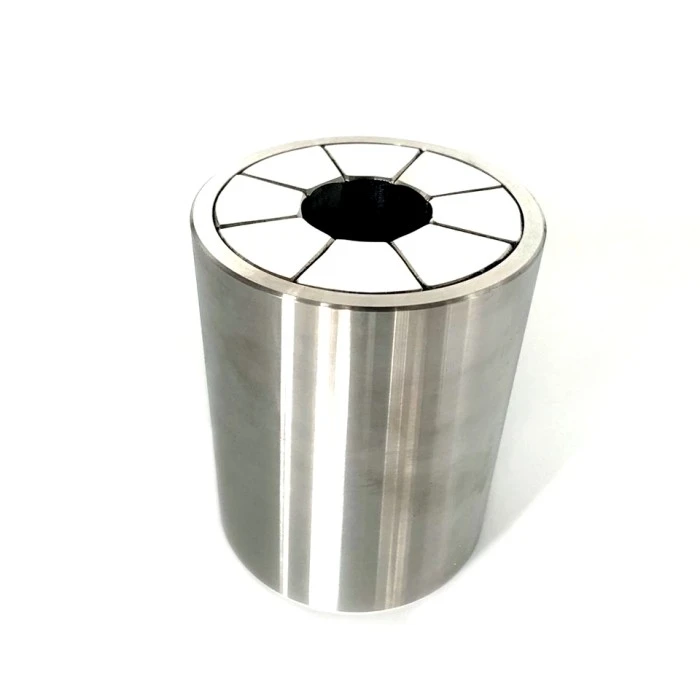
Before delving into size determination, it's essential to understand what a Halbach Array is. A Halbach Array is a special arrangement of permanent magnets that creates a strong magnetic field on one side while significantly reducing the field on the other side. This unique property makes it highly useful in many applications, such as magnetic levitation systems, particle accelerators, and electric motors. There are different types of Halbach Arrays, including linear and Cylindrical Halbach Array, each with its own characteristics and applications.
Factors Influencing the Size of a Halbach Array
Application Requirements
The intended application is perhaps the most significant factor in determining the size of a Halbach Array. For example, in a magnetic levitation system, the size of the array needs to be large enough to generate sufficient magnetic force to lift the object. If the array is too small, it won't be able to provide the necessary levitation force, and the system will fail to function properly.
In an electric motor, the size of the Halbach Array affects the motor's torque and power output. A larger array can generally produce more torque, but it also increases the size and weight of the motor. Therefore, a balance must be struck between the desired performance and the physical constraints of the application.
Magnetic Field Strength
The required magnetic field strength is another critical factor. Different applications demand different levels of magnetic field strength. For scientific research, such as in a particle accelerator, extremely high - strength magnetic fields may be necessary to control the trajectory of particles. To achieve a high magnetic field strength, a larger Halbach Array may be required, as the magnetic field strength is proportional to the number of magnets and their arrangement.
Space Constraints
The available space for the Halbach Array is often a limiting factor. In some applications, such as in small - scale electronic devices, there may be very limited space. In such cases, a smaller Halbach Array must be designed to fit within the available space while still meeting the performance requirements. This may involve using high - energy - product magnets or optimizing the Halbach Array Arrangement to achieve the desired magnetic field with fewer magnets.
Methods for Determining the Appropriate Size
Theoretical Calculations
One of the most common methods for determining the size of a Halbach Array is through theoretical calculations. These calculations are based on the principles of magnetism and take into account factors such as the magnetic properties of the magnets, the desired magnetic field strength, and the geometry of the array.
The magnetic field of a Halbach Array can be calculated using equations derived from Ampere's law and the Biot - Savart law. For a simple linear Halbach Array, the magnetic field at a point in space can be approximated by considering the contributions of each individual magnet in the array. However, these calculations can become quite complex, especially for large or irregularly shaped arrays.
Simulation Software
In addition to theoretical calculations, simulation software can be a powerful tool for determining the appropriate size of a Halbach Array. There are several commercial and open - source simulation tools available that can accurately model the magnetic field of a Halbach Array. These tools allow you to input the parameters of the array, such as the size, shape, and magnetic properties of the magnets, and then simulate the resulting magnetic field.
By using simulation software, you can quickly evaluate different array sizes and configurations to find the one that best meets your requirements. You can also visualize the magnetic field distribution, which can help you identify any potential issues or areas for improvement.
Prototyping and Testing
Another effective method is to build prototypes of different sizes and test them in the actual application. This hands - on approach allows you to directly measure the performance of the array and make adjustments as needed.
When prototyping, it's important to use high - quality magnets and precise manufacturing techniques to ensure accurate results. You can start with a small - scale prototype and gradually increase the size until you achieve the desired performance. Testing can involve measuring the magnetic field strength, the force generated by the array, and other relevant parameters.
Challenges in Size Determination
Magnet Availability and Cost
The availability and cost of magnets can pose challenges in determining the appropriate size of a Halbach Array. High - performance magnets, such as neodymium magnets, are often in high demand and can be expensive. If you need a large Halbach Array, the cost of the magnets can be a significant factor.

In some cases, you may need to compromise on the size of the array to stay within your budget. You can also explore alternative magnet materials or sourcing options to reduce costs.
Manufacturing Complexity
As the size of a Halbach Array increases, the manufacturing complexity also increases. Assembling a large array requires precise alignment and positioning of the magnets, which can be difficult to achieve. Any misalignment can significantly affect the performance of the array.
There are specific techniques and tools available for Halbach Array Assembly, but they may not be suitable for very large arrays. Therefore, you need to consider the manufacturing capabilities and limitations when determining the size of the array.
Conclusion
Determining the appropriate size of a Halbach Array is a complex process that requires careful consideration of various factors, including application requirements, magnetic field strength, space constraints, and cost. By using theoretical calculations, simulation software, and prototyping, you can make an informed decision and select the size that best meets your needs.
As a Halbach Array supplier, we have the expertise and resources to help you with every step of the process. Whether you need assistance with size determination, array design, or manufacturing, we're here to support you. If you're interested in learning more about our Halbach Array products or have specific requirements for your application, please feel free to contact us for a detailed consultation and procurement discussion.
References
- Knoepfel, H. (2000). Magnetic Fields: A Comprehensive Theoretical Treatise for Practical Use. Wiley - VCH.
- Furlani, E. P. (2001). Permanent Magnet and Electromechanical Devices: Materials, Analysis, and Applications. Academic Press.
- Halbach, K. (1980). "Design of permanent multipole magnets with oriented rare earth cobalt material". Nuclear Instruments and Methods in Physics Research. 169(1): 1–10.


