


As a supplier of SMC Material, I've witnessed firsthand the pivotal role that the elasticity modulus plays in the application of this remarkable substance. Soft Magnetic Composite Materials (SMC) have emerged as a cornerstone in various industries, owing to their unique magnetic properties and versatility. In this blog, I'll delve into how the elasticity modulus affects the application of SMC Material, drawing on my experiences in the field and the scientific principles that govern its behavior.
Understanding the Elasticity Modulus
Before we explore its impact on SMC Material applications, let's first understand what the elasticity modulus is. The elasticity modulus, also known as Young's modulus, is a measure of a material's stiffness. It quantifies the relationship between stress (force per unit area) and strain (deformation) within the elastic range of a material. In simpler terms, it tells us how much a material will stretch or compress when a force is applied to it.
For SMC Material, the elasticity modulus is a crucial parameter that influences its mechanical and magnetic performance. A higher elasticity modulus indicates a stiffer material, which means it will deform less under stress. Conversely, a lower elasticity modulus implies a more flexible material that can undergo greater deformation without permanent damage.
Impact on Mechanical Applications
One of the primary areas where the elasticity modulus of SMC Material comes into play is in mechanical applications. SMC Material is often used in the manufacturing of components that require a balance between strength and flexibility. For example, in the automotive industry, SMC Material is used to produce parts such as engine mounts, suspension components, and brake pads.
In engine mounts, the elasticity modulus of SMC Material is critical for isolating vibrations and reducing noise. A higher elasticity modulus allows the engine mount to effectively absorb and dampen vibrations, preventing them from being transmitted to the vehicle's chassis. This not only improves the comfort of the passengers but also reduces wear and tear on the engine and other components.
Similarly, in suspension components, the elasticity modulus of SMC Material affects the handling and stability of the vehicle. A stiffer material with a higher elasticity modulus can provide better support and control, allowing the suspension to respond more effectively to road conditions. On the other hand, a more flexible material with a lower elasticity modulus can offer a smoother ride by absorbing shocks and vibrations more efficiently.
In brake pads, the elasticity modulus of SMC Material influences the braking performance and durability. A higher elasticity modulus ensures that the brake pad maintains its shape and integrity under high pressure, providing consistent braking force. Additionally, it helps to reduce noise and vibration during braking, enhancing the overall driving experience.
Impact on Magnetic Applications
In addition to its mechanical properties, the elasticity modulus of SMC Material also has a significant impact on its magnetic performance. SMC Material is widely used in magnetic applications, such as transformers, inductors, and electric motors, due to its excellent magnetic properties and low eddy current losses.
The elasticity modulus affects the magnetic properties of SMC Material by influencing the alignment and distribution of the magnetic particles within the composite. A higher elasticity modulus can help to maintain the alignment of the magnetic particles, resulting in improved magnetic permeability and reduced magnetic losses. This is particularly important in high-frequency applications, where minimizing losses is crucial for efficient operation.
Furthermore, the elasticity modulus of SMC Material can affect its thermal stability and mechanical reliability in magnetic applications. A stiffer material with a higher elasticity modulus can better withstand the thermal stresses and mechanical vibrations associated with magnetic components, ensuring long-term performance and reliability.
Considerations for Different Applications
When selecting SMC Material for a specific application, it's essential to consider the desired elasticity modulus based on the requirements of the application. For applications that require high strength and stiffness, such as structural components and high-performance magnetic devices, a higher elasticity modulus may be preferred. On the other hand, for applications that demand flexibility and shock absorption, such as vibration isolation and noise reduction, a lower elasticity modulus may be more suitable.
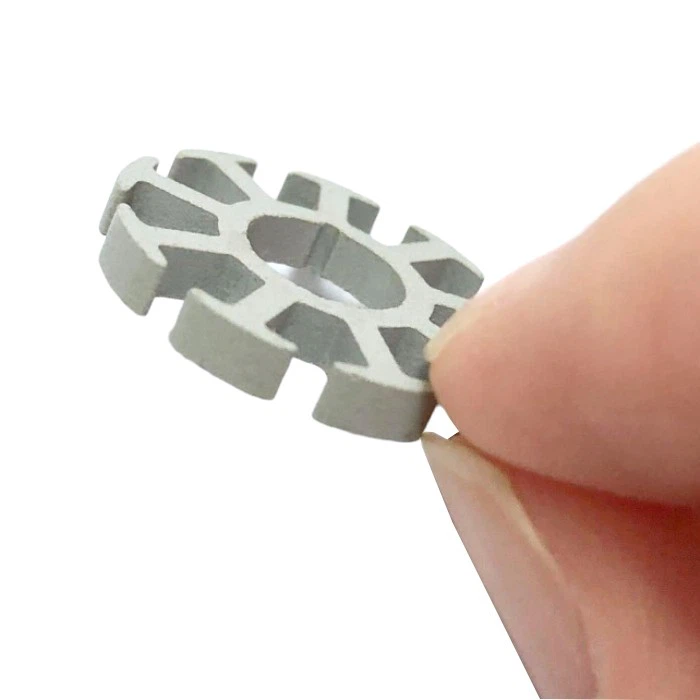

It's also important to note that the elasticity modulus of SMC Material can be tailored through various manufacturing processes and material formulations. By adjusting the composition and processing parameters, it's possible to achieve a wide range of elasticity moduli to meet the specific needs of different applications.
Conclusion
In conclusion, the elasticity modulus of SMC Material plays a crucial role in its application across various industries. Whether in mechanical or magnetic applications, the elasticity modulus influences the performance, durability, and reliability of SMC Material components. As a supplier of SMC Material, I understand the importance of providing high-quality materials with the appropriate elasticity modulus to meet the diverse needs of our customers.
If you're interested in learning more about how the elasticity modulus of SMC Material can benefit your specific application or if you're looking for a reliable supplier of Soft Magnetic Composite Materials, please don't hesitate to contact us. We'd be happy to discuss your requirements and provide you with the best solutions for your project.
References
- "Handbook of Soft Magnetic Materials" by A. E. Clark
- "Magnetic Materials and Their Applications" by B. D. Cullity and C. D. Graham
- "Mechanical Behavior of Materials" by George E. Dieter


