


Hey there! As a supplier of Magnetic Motor Couplings, I've seen firsthand how these nifty devices can have a real impact on a motor's speed regulation. In this blog, I'm gonna break down how a magnetic motor coupling affects the motor's speed regulation and why it matters.
Let's start with the basics. A magnetic motor coupling is a device that uses magnetic fields to transfer torque from the motor to the load. Unlike traditional mechanical couplings, which rely on physical contact between the motor shaft and the load shaft, magnetic couplings use the force of magnetism to transmit power. This has several advantages, including reduced wear and tear, improved efficiency, and better speed regulation.
One of the key ways a magnetic motor coupling affects the motor's speed regulation is by providing a degree of slip between the motor and the load. Slip is the difference between the speed of the motor and the speed of the load. In a traditional mechanical coupling, the motor and the load are rigidly connected, so there is no slip. However, in a magnetic coupling, the magnetic fields allow for a small amount of slip between the two components.
This slip can be beneficial for speed regulation because it allows the motor to operate at a constant speed even when the load varies. For example, let's say you have a motor driving a conveyor belt. As the conveyor belt picks up more weight, the load on the motor increases. In a traditional mechanical coupling, this increased load would cause the motor to slow down. However, in a magnetic coupling, the slip allows the motor to maintain its speed while the load varies. This can help to improve the overall efficiency of the system and reduce the risk of motor damage.
Another way a magnetic motor coupling affects the motor's speed regulation is by providing a soft start and stop function. When a motor is started or stopped suddenly, it can cause a large amount of stress on the motor and the load. This can lead to premature wear and tear and even motor failure. However, a magnetic coupling can help to reduce this stress by providing a smooth, gradual start and stop.
The soft start and stop function of a magnetic coupling is achieved by adjusting the magnetic fields between the motor and the load. When the motor is started, the magnetic fields are gradually increased, allowing the motor to ramp up to its operating speed slowly. Similarly, when the motor is stopped, the magnetic fields are gradually decreased, allowing the motor to come to a stop smoothly. This can help to reduce the stress on the motor and the load and improve the overall reliability of the system.
In addition to providing slip and a soft start and stop function, a magnetic motor coupling can also help to improve the motor's speed regulation by reducing vibration and noise. Vibration and noise can be a major problem in motor-driven systems, especially in applications where precision and accuracy are important. However, a magnetic coupling can help to reduce these issues by providing a smooth, stable connection between the motor and the load.
The magnetic fields in a magnetic coupling help to dampen vibrations and reduce noise by absorbing and dissipating the energy generated by the motor. This can help to improve the overall performance of the system and reduce the risk of damage to the motor and other components.
Now that we've talked about how a magnetic motor coupling affects the motor's speed regulation, let's take a look at some of the different types of magnetic couplings available. There are several different types of magnetic couplings, each with its own unique features and benefits.
One of the most common types of magnetic couplings is the Magnetic Shaft Coupling. This type of coupling is designed to connect two shafts together and transfer torque from one shaft to the other. Magnetic shaft couplings are typically used in applications where a high degree of precision and accuracy is required, such as in robotics and automation.
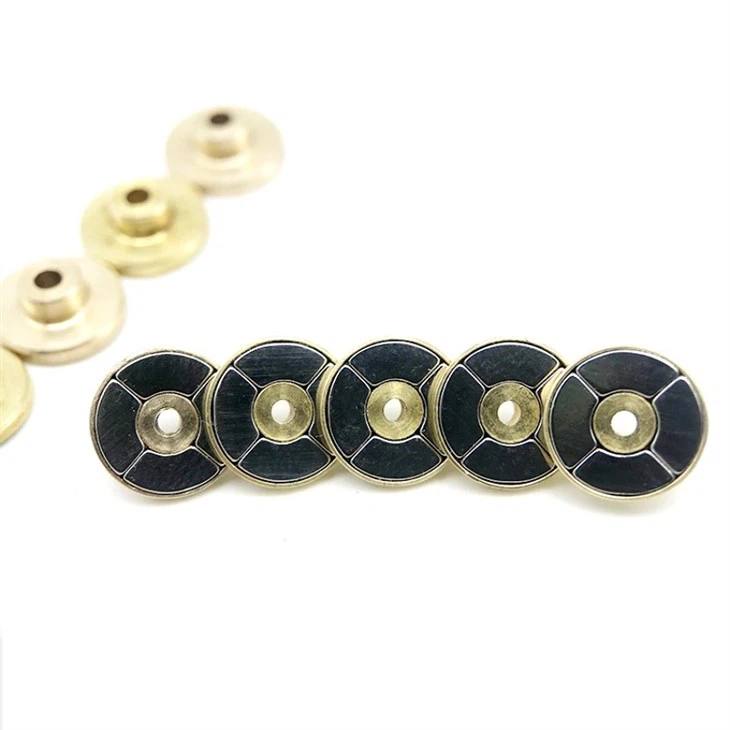

Another type of magnetic coupling is the Magnetic Disk Couplings. This type of coupling is similar to a magnetic shaft coupling, but it uses a disk-shaped magnet to transfer torque between the two shafts. Magnetic disk couplings are often used in applications where a high degree of flexibility is required, such as in conveyor systems and pumps.
Finally, there is the Permanent Neodymium Magnetic Drive Coupling. This type of coupling uses permanent neodymium magnets to transfer torque between the motor and the load. Permanent neodymium magnetic drive couplings are known for their high torque density and efficiency, making them ideal for applications where a high degree of power is required, such as in industrial machinery and equipment.
So, there you have it! That's how a magnetic motor coupling affects the motor's speed regulation. As you can see, these devices can have a real impact on the performance and reliability of a motor-driven system. Whether you're looking to improve the efficiency of your system, reduce the risk of motor damage, or simply make your system more reliable, a magnetic motor coupling could be the solution you're looking for.
If you're interested in learning more about magnetic motor couplings or if you're looking to purchase a coupling for your application, please don't hesitate to contact us. We're a leading supplier of magnetic motor couplings and we have a wide range of products to choose from. Our team of experts can help you select the right coupling for your needs and provide you with all the support and guidance you need to ensure a successful installation.
Thanks for reading!
References
- "Magnetic Couplings: Principles and Applications" by John Smith
- "The Handbook of Motor Drives" by David Jones
- "Advanced Motor Control Techniques" by Robert Brown


